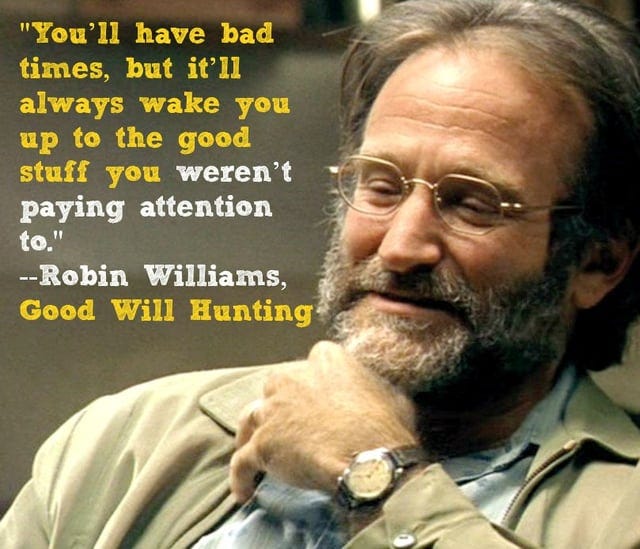
"I'd ask you about love, you'd probably quote me a sonnet. But you've never looked at a woman and been totally vulnerable. Known someone that could level you with her eyes, feeling like God put an angel on earth just for you."
— Sean Maguire (Robin Williams), Good Will Hunting
There's a moment in Good Will Hunting—quiet, devastating, unforgettable—where Robin Williams' character, Sean Maguire, sits on a park bench and gently dismantles everything Will (Matt Damon) thinks he knows.
Will is brilliant. Genius, even. He's read every book. Quoted every quote. Solved equations most professors can't touch. But he hasn't lived.
And that's what Sean Maguire calls him out on.
Sure, you can memorize every sonnet Shakespeare ever wrote. But until you've actually felt your heart explode when you fell in love for the first time, or been there during someone's hardest moment, or stood under the Sistine Chapel with your neck craned back staring up at that magnificent ceiling…you don't really know anything.
The Park Bench Truth
We're drowning in information. Every sight in the world is available on your phone.
You can watch a dozen 4K videos of the Brooklyn Bridge, but it's not the same as walking across it at sunset, feeling the cables vibrate as traffic passes below, and watching Manhattan light up in front of you.
But isn't learning from others' experiences valuable too?
Of course it is. I'm not saying research is useless—I'm saying it's incomplete. And when people mistake incomplete for complete, reality has a way of serving up a brutal education.
That's the truth: you can't understand life by watching it through a screen.
You have to be there.
When Theory Meets Reality
There's a line in The Bourne Supremacy that nails this:
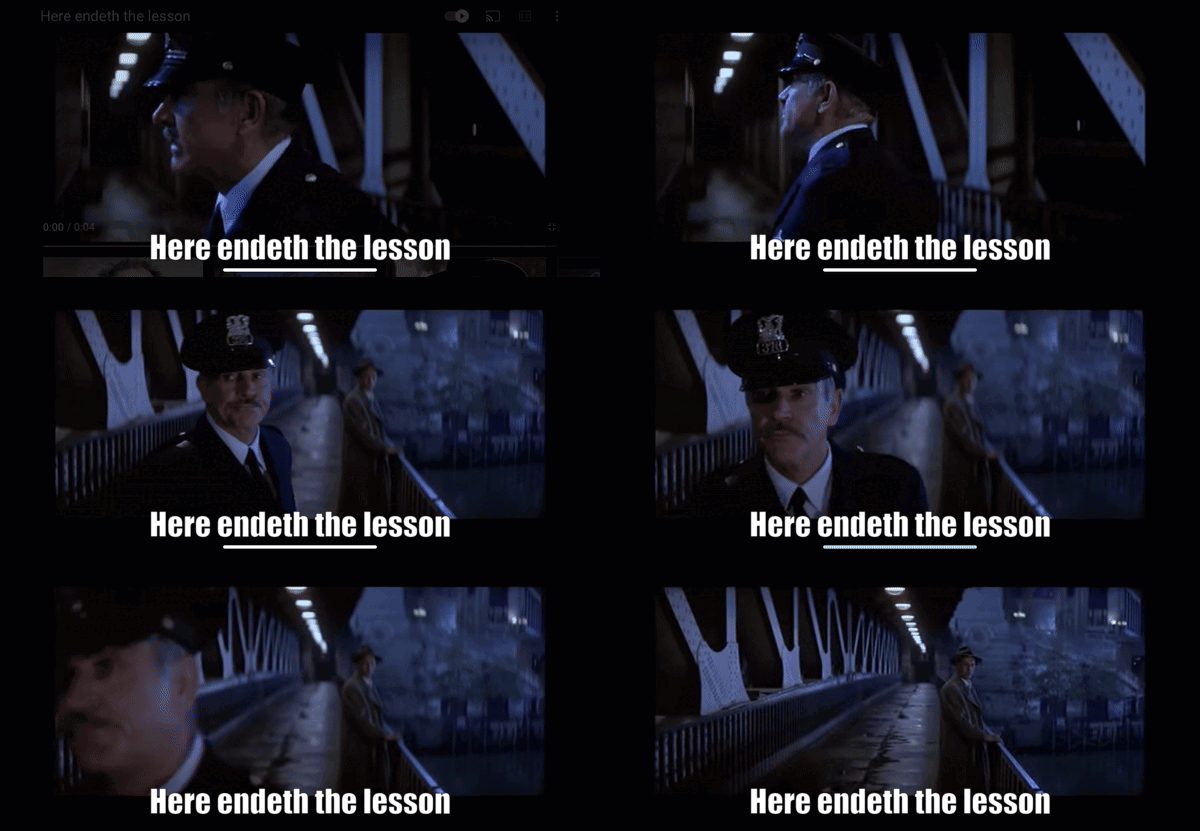
Ward Abbott (Brian Cox) tells Pam Landy (Joan Allen), in regard to the spy game, "You talk about this stuff like you read it in a book."
That line wasn't just a dig. It was a warning.
Because that's what so many of us do now. We read the headline. Watch the video. Swipe past the soundbite. And suddenly we're experts. Or so we think.
We think watching the highlight reel makes us ready for the game. But reality is not the highlight reel. And real life doesn't give a damn about your theories.
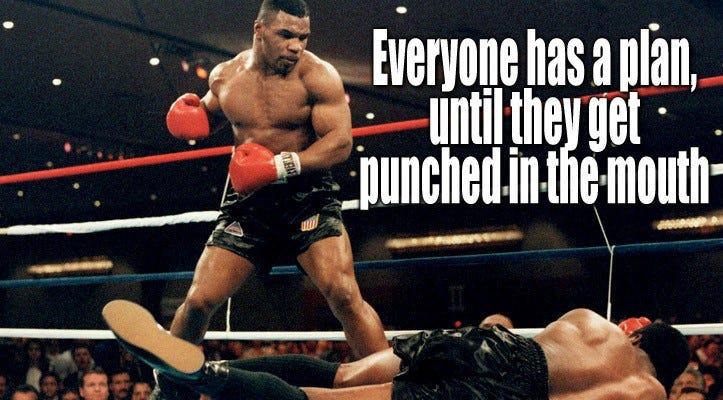
As Mike Tyson puts it: "Everyone has a game plan until they get punched in the mouth."
There's a difference between research and experience. Research can lead to theories, but those theories need to be tested in the real world. Under pressure. When consequences matter.
The Analysis Paralysis Trap
Here's where it gets dangerous: we convince ourselves that more research equals more preparation. We tell ourselves we're "not ready yet" because we haven't read enough, watched enough tutorials, or found the perfect strategy.
But really? We're just scared.
How do I know when I have 'enough' experience vs. when I'm just making excuses?
Simple. When you catch yourself saying "I just need to research this one more thing," you're probably already past the point where you should have started doing.
The world will teach you faster than Google ever could. But only if you show up.
Reality is Undefeated
Elizabeth Holmes She studied Steve Jobs. Wore the turtlenecks. Quoted bold visions. But she never actually built the thing she promised. Holmes thought charisma and confidence could replace experience and execution. It couldn't.
So what? Maybe you're not promising to revolutionize blood testing, but are you talking about starting a business you've never actually run? Same trap.
Adam Neumann (WeWork) He talked about disrupting real estate like it was a tech company. Investors bought the story—until the numbers didn't add up. Turns out, community slogans and kombucha taps don't replace boring business fundamentals.
So what? Are you using buzzwords to avoid dealing with the nuts and bolts of what you're actually trying to accomplish?
Real Life Is Still the Ultimate Teacher
Steve Jobs didn't rely on focus groups. He trusted experience, intuition, and taste. He lived in the details, obsessing over fonts and product feel.
Elon Musk read the rocket science books, sure. But then he built rockets. Failed. Tried again. Experience made him dangerous.
And Captain "Sully" Sullenberger? The algorithm said he had enough altitude to return to LaGuardia. He said no. He'd been in the cockpit. He knew. He landed on the Hudson. Saved 155 lives. And later, when experts questioned him with simulations, Sully responded:
"You're looking at this after the fact. I had 35 seconds."
Testing Beats Theorizing
David Goggins tells a story about his first ultra-marathon: no training, broken feet, no crew, no clue.
He ran 100 miles in under 24 hours.
Every so-called expert said what he did was "impossible." That his kidneys would fail. That it was unsafe. But Goggins didn't care what the experts theorized.
He went out there to see for himself. By testing himself. By actually running.
He didn't Google what was possible. He tested what was possible.
The Bottom Line
Reading about life is not the same as living it. The world will try to convince you that seeing something once on your phone is enough.
This sounds great, but how do I actually apply this?
Here's what I want you to do this week: Pick one thing you've been "researching" forever. That business idea. That skill. That conversation you need to have.
Stop reading about it. Start doing it.
Yes, you'll probably mess up.
Good.
That's called learning.
Because wisdom—the kind that shapes you—only comes from doing. From failing. From being there.
So stop being a spectator in your own life. Stop settling for borrowed experiences. Go out and see for yourself.
Because when you do, something happens that no article or video can teach you—you discover things about yourself you never knew existed. You become better prepared for whatever comes next. And every experience, every connection, every moment hits deeper because you earned it.
Because you can't Google experience.