"Amen and amen and amen. You'll have to forgive me; I'm not familiar with the local customs. But where I come from, you always say 'amen' when you hear a prayer. And that's what you just heard, ladies and gentlemen. A prayer. It's called the prayer for the dead."
— Danny DeVito as Lawrence "Larry the Liquidator" Garfield; Other People’s Money
Movies often contain the answers to life's riddles, if we're paying attention. Norman Jewison's 1991 adaptation of Jerry Sterner's play 'Other People's Money' offers profound insights about adaptation and obsolescence.
With artificial intelligence rapidly transforming entire industries before our eyes, a question looms larger than ever: How will AI reshape our workplace, economy, and world? Which skills, jobs, and business models will survive, and which will join the ranks of obsolescence? The answer might be found in a 1991 film that was eerily prescient about the ruthless nature of adaptation.
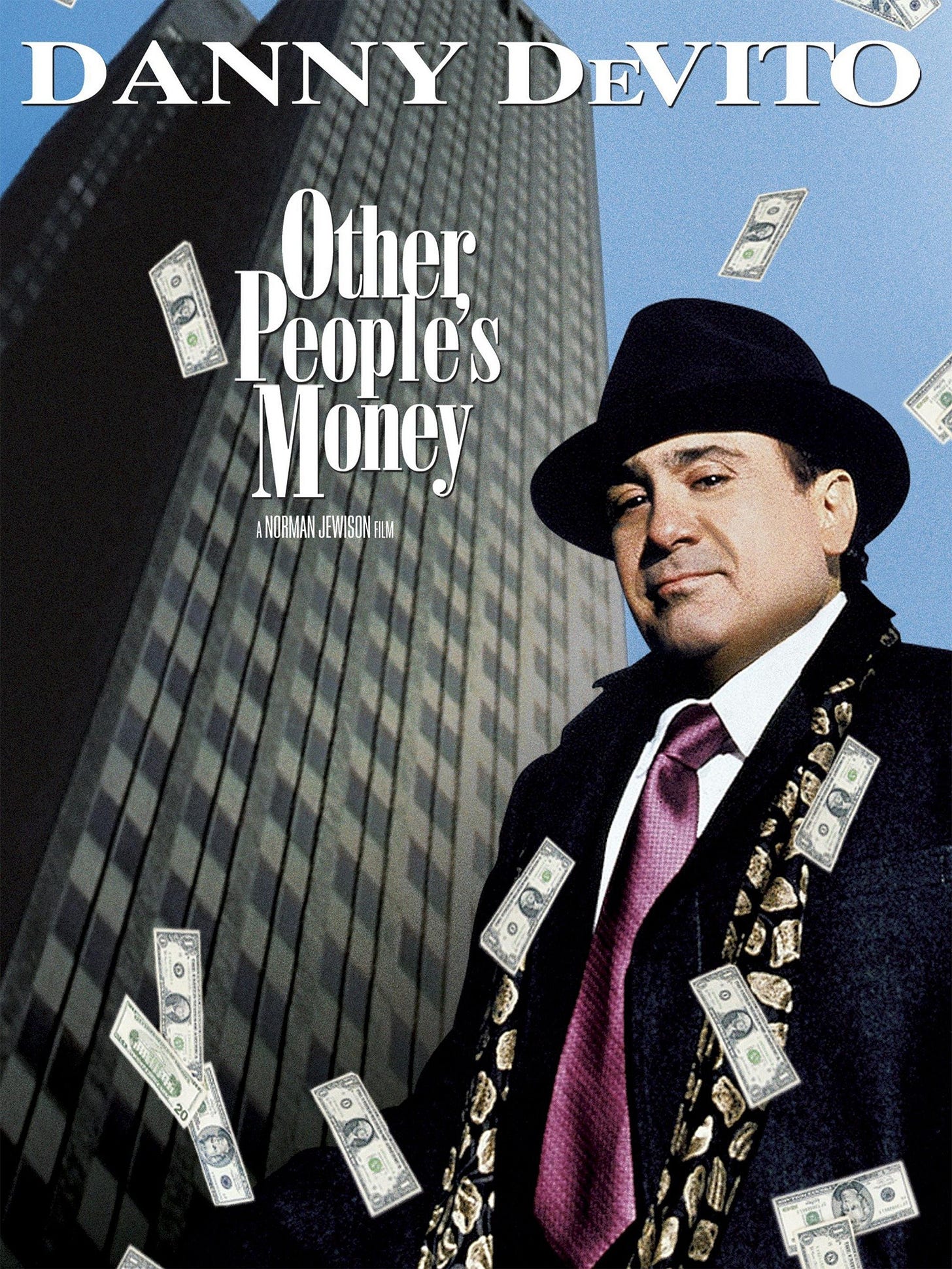
At its heart, Other People's Money isn't just a business movie—it's a love story playing out against the backdrop of corporate warfare. On a crisp autumn day in New England, Danny DeVito as Lawrence "Larry the Liquidator" Garfield arrives to dismantle New England Wire & Cable, a company he sees as already dead—or in business terms, obsolete.
The snow-capped factory buildings stand as monuments to a bygone era, and inside them, Andrew "Jorgy" Jorgenson (Gregory Peck) clings desperately to tradition. But something unexpected happens when Larry meets Kate Sullivan (Penelope Ann Miller), the brilliant lawyer opposing his takeover. Beneath his ruthless exterior, Larry finds himself drawn to her intelligence and conviction.
At its heart, Other People's Money isn't just a business movie—it's a love story. Playing out against the backdrop of corporate warfare.
On a crisp autumn day in New England, Danny DeVito as Lawrence "Larry the Liquidator" Garfield arrives to dismantle New England Wire & Cable, a company he sees as already dead—or in business terms, obsolete.
The snow-capped factory buildings stand as monuments to a bygone era, and inside them, Andrew "Jorgy" Jorgenson (Gregory Peck) clings desperately to tradition.
But something unexpected happens when Larry meets Kate Sullivan (Penelope Ann Miller), the brilliant lawyer opposing his takeover. Beneath his ruthless exterior, Larry finds himself drawn to her intelligence and conviction.
What begins as attraction becomes something deeper. They're corporate star-crossed lovers—Kate defending her stepfather's company, Larry determined to liquidate it for profit. Yet they connect on a level neither expected.
Larry cuts through with brutal clarity: "You know the surest way to go broke? Keep getting an increasing share of a shrinking market. Down the tubes. Slow but sure."
He continues, delivering the film's most memorable warning: "You know, at one time there must have been dozens of companies making buggy whips. And I'll bet the last company around was the one that made the best goddamn buggy whip you ever saw. Now how would you like to be an investor in that company?"
This lesson about obsolescence has never been more relevant than today. Just as the automobile rendered buggy whip manufacturers obsolete, AI threatens to fundamentally change countless professions and business models. The question isn't whether this transformation is coming—it's already here.
The magic of the story is watching Larry—a man who prides himself on ruthless consistency—evolve. When he wins the proxy fight, instead of dismantling the company as planned, he pivots to modernization. He shifts production from outdated elevator cables to airbag mesh. His willingness to adapt saves everything. The company. The profits. The jobs.
AND wins him the girl.
The Adaptation Principle
Throughout the film, Larry demonstrates his philosophy that obsolescence is the real enemy. Not corporate raiders like himself.
In a telling scene at a fashionable Japanese restaurant (quite novel in the 1980s when the film was made), Larry initially plays the fish-out-of-water. Asks for bread. Requests a fork instead of chopsticks.
Yet in the same breath, he tells Kate: "I've got everyone in my office learning Japanese. You better adapt or die."
When Kate gets up to leave, she surprises him by speaking Japanese to the waitress, who laughs and translates. But the real reveal comes next—Larry responds in perfect Japanese and then effortlessly picks up his chopsticks, using them like a pro. The message is clear: while others might be caught unprepared by change, Larry is already ten steps ahead, privately mastering the skills needed for the future.
Reminds me of when cars first replaced horses. People would approach intersections in their new automobiles. See another car coming. Instead of hitting the brake, they'd pull back on the steering wheel yelling "Whoa! Whoa!" Like it was reins on a horse.
Their habits hadn't caught up. Their reality hadn't shifted.
Most revealing is Larry's masterclass in value investing when explaining his interest in New England Wire & Cable: "This company is worth more dead than alive. Based on the assets, it should be trading at $40, but I can pick it up for $10. Who could resist that?"
This isn't just movie dialogue—it's Warren Buffett's philosophy stripped down. Value investing means spotting the hidden potential others miss, then figuring out how to unlock it. Sometimes that means dismantling, sometimes reinventing.
The key is adaptation.
That's not just about stocks. That's about us.
How many of us are trading below our true value? We've got solid fundamentals - knowledge, experience, connections - but we're undervalued because we're missing that one thing. That catalyst. That evolution.
What makes Larry unique is his willingness to adapt his own plans when presented with new information. When Kate challenges his thinking, he doesn't dig in his heels like Jorgy. Instead, he reassesses and finds a solution that works for everyone. His evolution mirrors his business strategy—spot hidden value, then find a way to unlock it, even if that means reinventing yourself in the process.
Their love story becomes a perfect metaphor for business adaptation: two opposing forces finding unexpected value in each other and creating something new and viable from what initially seemed like an impossible situation.
Like Larry and Kate's unexpected alliance, the business world is full of stories where adaptation turned potential failure into spectacular success—and where resistance to change turned market leaders into cautionary tales.
Real-World Examples:
Those Who Learned The Lesson Adapted And Thrived
Instagram: Started as Burbn, a confusing check-in app going nowhere fast. The founders recognized their obsolescence before it was too late, slashing away everything except the photo-sharing feature users actually liked. This ruthless simplification—reminiscent of Larry's vision to focus on what works—led to a $1 billion Facebook acquisition.
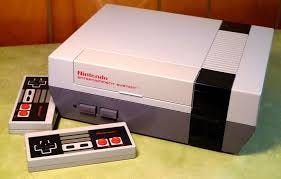
Nintendo: For 70+ years, they made playing cards, not video games. When digital entertainment emerged, they could have gone the way of the buggy whip manufacturers Larry referenced. Instead, they completely reinvented themselves, going from paper products to revolutionizing the gaming industry. They didn't just avoid obsolescence—they helped define the future.
Slack: Originally developed as an internal communication tool for a failing game company, the founders realized their side project was more valuable than their main business. Like Larry seeing potential in airbag mesh when elevator cables became obsolete, they abandoned their game and turned their chat tool into a multi-billion dollar product. Sometimes your salvation isn't your core business—it's hiding in plain sight.
Failure to Learn the Lesson:
In one scene in the movie set at Jorgy and Bea Sullivan's country home, Kate proposes several legal and corporate strategies to save the company. Jorgy refuses each one. On moral grounds. His principles matter more than survival. Kate's frustration is palpable as she tries to make him understand that his principles won't protect the employees who will lose their jobs if the company fails.
Kodak: In a twist of painful irony, Kodak invented the digital camera in 1975, then buried it to protect their film business. They were the perfect example of what Larry warned about: "You know the surest way to go broke? Keep getting an increasing share of a shrinking market." By the time they embraced digital photography, the market had moved on. In 2012, they filed for bankruptcy—not because of outside "liquidators" like Larry, but because they refused to cannibalize their cash cow before someone else did it for them.
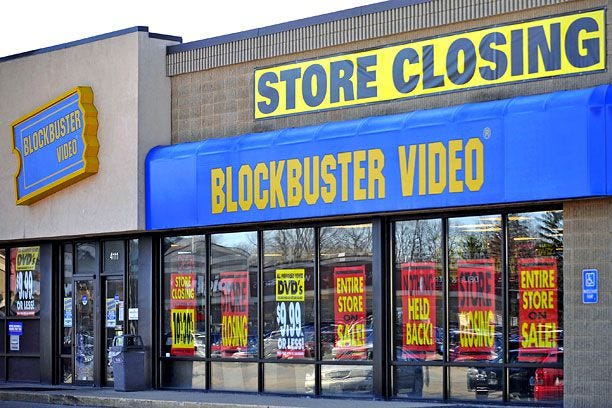
Blockbuster: When Netflix (then a DVD-by-mail service) offered to partner, Blockbuster declined. They were making the best damn buggy whips (or in this case, video rental stores) in the world, but the market had already begun its shift. They couldn't see that their physical stores and late fees—their bread and butter—were precisely what customers hated. Today, Netflix dominates streaming while Blockbuster exists as a single store in Oregon—less a business than a monument to obsolescence.
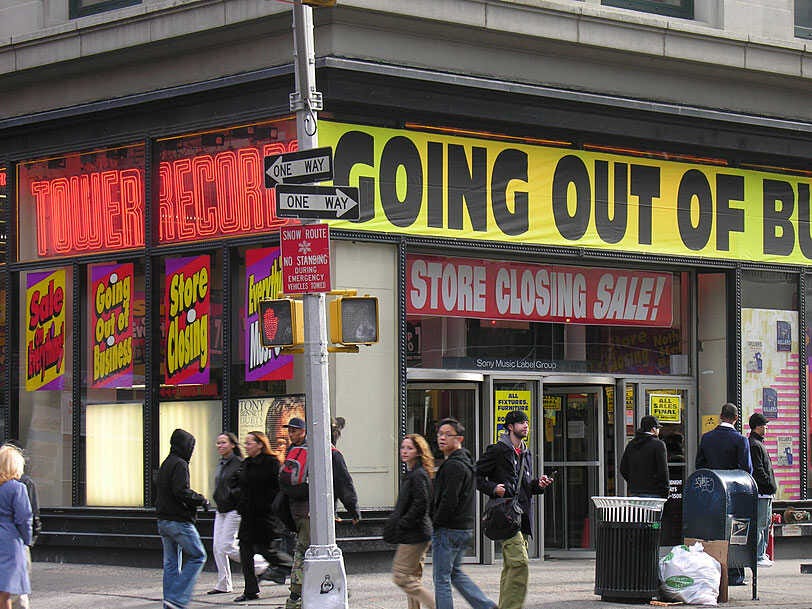
Tower Records: Remember browsing through CDs in those giant stores? Tower Records didn't merely avoid adaptation—they actively bet against it. When Apple launched iTunes, Tower doubled down on physical media, convinced that digital music was a passing fad. Within a few years, their 200+ stores worldwide were shuttered. They made the best damn CD stores around, but like Larry's buggy whip company, excellence in a dying industry is still a death sentence.
The Personal Pivot: Adaptation Beyond Business
The power of adaptation extends far beyond the boardroom. Just as Larry and Kate found unexpected common ground and reinvented their relationship, we all face moments that demand transformation:
The Career Switcher: Think you're too deep into your career path to change direction? Tell that to Vera Wang, who was a figure skater and fashion editor before designing her first wedding dress at 40. Or to Julia Child, who didn't learn to cook until her late 30s and published her first cookbook at 49. Like Larry seeing opportunity in airbag mesh, they spotted value in unexpected places.
The Relationship Evolver: The couples who last decades aren't the ones who stay the same—they're the ones who grow together. Larry and Kate's unlikely connection reminds us that sometimes the most rewarding relationships come from embracing change rather than resisting it. Each life stage requires reinvention of the relationship. The alternative? Becoming a relationship buggy whip—obsolete and abandoned.
The Skill Pivoteer: The average person will change careers 5-7 times in their lifetime. Yet many of us resist learning new skills, clinging to "the way we've always done things" even as those methods become obsolete. Larry had his employees learning Japanese long before his competitors, demonstrating the advantage of preparing for change before it's forced upon you.
Your Turn: Buggy Whips or Airbags?
Like Larry and Kate finding a way to transform both business and personal relationships, we all face moments where we must choose between evolution and extinction. The real question isn't whether obsolescence is coming—it's whether you'll recognize it before it's too late.
Ask yourself:
Where in your life are you making "the best damn buggy whip" in a world that no longer needs them?
What hidden assets do you possess that could be repurposed, just as New England Wire & Cable shifted from elevator cables to airbag mesh?
How are you preparing for change while others remain oblivious?
The market, like Larry, is ruthlessly unsentimental. It doesn't care about your history, comfort, or preferences. It rewards adaptation and punishes obsolescence.
Look around your life—your career, relationships, skills, habits. Which aspects are ripe for reinvention? Where have you been reciting Jorgy's prayer for the dead instead of embracing Larry's willingness to adapt?
In the end, Larry discovered that sometimes the most profitable move isn't dismantling what exists, but reimagining what could be. Just as he found love where he least expected it, he found business opportunity by shifting perspective rather than sticking to his original plan. He adapted in business and in love—and won on both fronts.
The question now is: Which side of history will you be on? The company making buggy whips when cars were taking over? Or the one that saw obsolescence coming and pivoted?
With artificial intelligence now transforming our economy at a pace that makes the industrial revolution look glacial, this question has never been more urgent. Entire professions, from legal research to content creation to medical diagnostics, are facing their "buggy whip moment." Those who recognize this shift and adapt their skills, businesses, and mindsets accordingly will thrive. Those who don't may find themselves making the best version of something the world no longer needs.
Adapt and evolve — Or die.