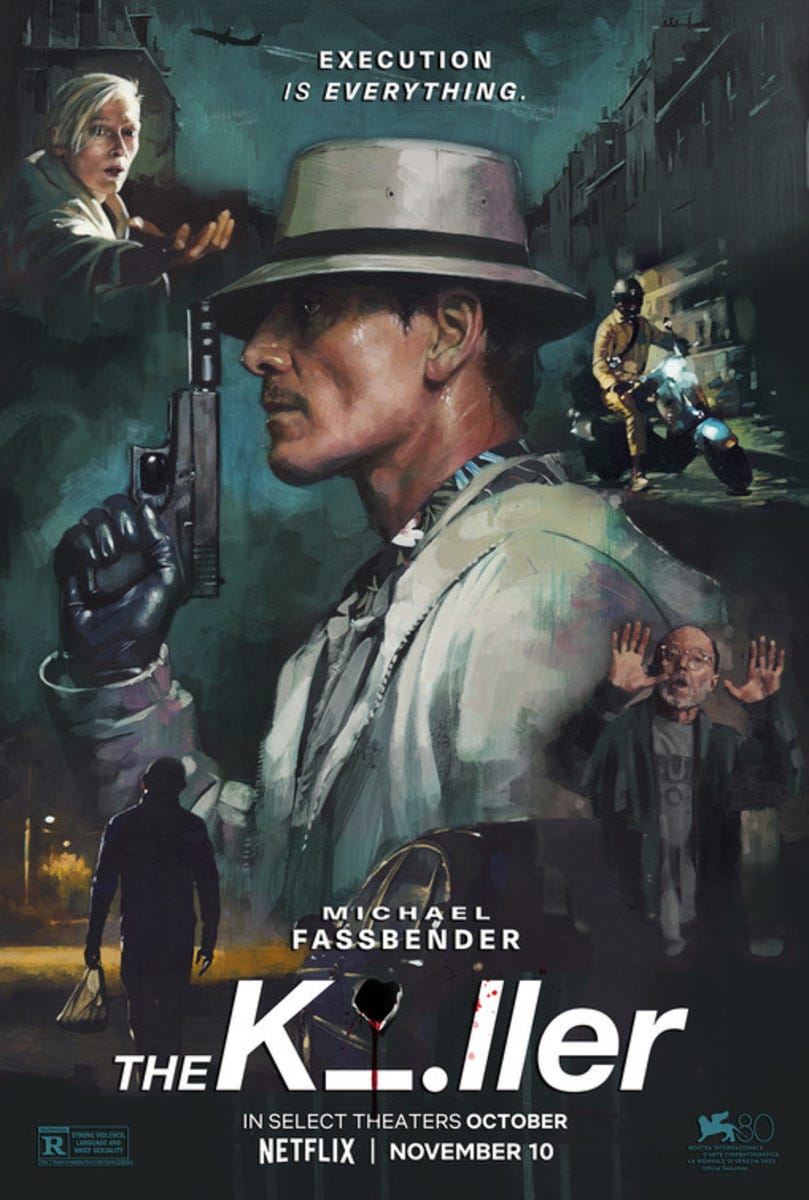
The opening scene of David Fincher’s The Killer is particularly brilliant at telling a story, the way, only a movie can, with images and sound. Now, I’m a huge Fincher fan to begin with—Seven, Fight Club, The Social Network, and Mank could all be showcased in a masterclass on filmmaking. But The Killer stands out not just because it’s a slick, genre-centric thriller; it also has this almost ASMR-quality sound design that pulls you in and rattles your nerves in the most satisfying way.
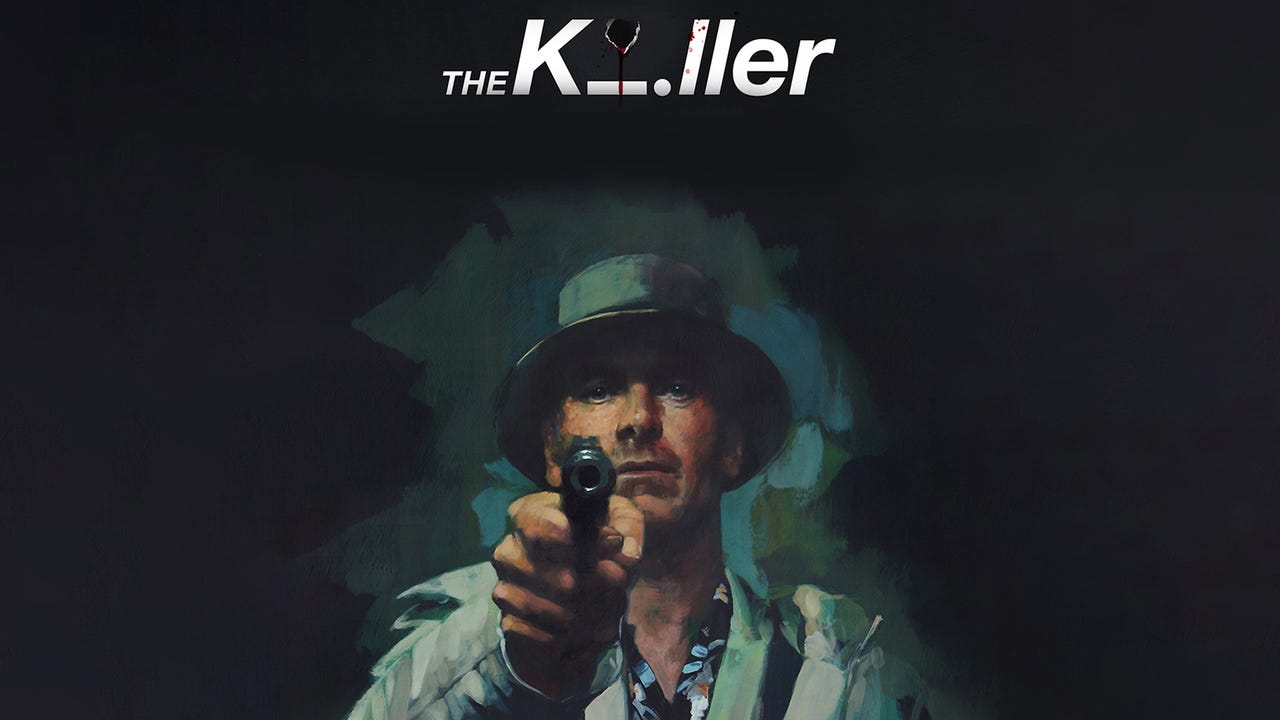
On the surface, The Killer tells the story of a highly skilled contract assassin who botches a hit, prompting his employers to come after him and the woman he loves. But scratch beneath the blood, bullets, and perfectly assembled sniper rifles, and you find a theme that resonates far beyond the screen: once you discover your “must,” the thing you truly care about more than your old life, there’s no going back.
The Cinematic Hook: One Last Job… or a New Life?
We’ve all seen “the last job” trope before. A master thief or a hitman wants to leave the life behind for the person they love—except they have one final assignment. Naturally, it goes south. In The Killer, though, screenwriter Andrew Kevin Walker and David Fincher tweak the formula by placing that botched moment right at the beginning, hooking us into the fallout that follows.
While our main character is zeroing in for what should be a clean shot, we get voiceover detailing his “rules for success”—the disciplined, almost spiritual approach he takes to killing.
But as a viewer, you notice he’s distracted by the presence of a beautiful woman (a dominatrix hired by his target) and, in a deeper sense, by thoughts of his own partner. That internal conflict tips us off: there’s a new thing—in this case, a woman he loves—that has him envisioning a new life. One that runs counter to everything he’s built so far. She, more than money, or neutrality, or anonymity, is his new reason why. As in, the reason why he is doing the things he does—and is about to do, which will require sacrifice.
Fincher brilliantly reveals this inner conflict, as well as the potential consequences for the mail character in the opening assassination scene of the movie.
Why This Matters to the Rest of Us
Now, most of us aren’t jetting off on contract-killer missions. But we do encounter moments that suddenly shift our priorities. Maybe you’ve been all about your career for a decade, when boom—you get married or become a parent. Or you face a health crisis that makes you reconsider the entire roadmap you’ve built. Perhaps you find yourself at odds with what society says you should want—money, status, a certain lifestyle—and realize your “must” is something else entirely, like time with family, personal well-being, or pursuing a creative dream.
That’s exactly what Tony Robbins talks about when he says we need to find our “must.” It’s that deep, driving reason why you’ll do whatever it takes—even if it means making sacrifices that scare you to death.
The Pain Points of Changing Your Life
If you’ve ever tried to make a major shift, you probably recognize these hurdles:
Fear of Losing Identity:
“Who am I if I’m not the CEO/doctor/superstar salesman?” When you’ve built your entire self-image around a job or a particular role, stepping away can feel like free-falling.Uncertainty About the Future:
Changing course often means leaving behind comfort and stability. No one wants to throw away a solid paycheck or a secure routine unless they’re sure there’s something better on the other side. (Spoiler: there is, but you don’t see it until you leap.)
Lack of Clarity on Your “Why”:
It’s easy to say “I need a change,” but why? Without a concrete reason—your must—your conviction will waver. And when it wavers, you’re more likely to revert to old habits.Social & Familial Pressures:
Let’s be honest: people close to you can sometimes hold you back because they’re used to the “old” you. Or they might feel threatened by your ambition or newfound clarity. This resistance can be a major emotional hurdle.Emotional Overwhelm:
Changing your life stirs up guilt, fear, and even imposter syndrome—especially if you’re entering a field or lifestyle that feels completely new.
The Modern Context: Why This Is Hitting Home Now
The Pace of Modern Life: We’re all juggling a million things—careers, side hustles, social media, family obligations—so the idea of adding a big life pivot can feel insane. Yet this same busy culture is what leads us to question: “Is any of this really worth it?”
The Great Resignation: A record number of people have decided to quit or shift jobs in search of something more meaningful or less draining. Many are realizing that traditional measures of success—fat paychecks, corner offices—don’t fill the deeper void of purpose.
Social Media’s Highlight Reel: It’s tough to admit you’re unfulfilled when everyone else’s life looks perfect on Instagram. This can keep you stuck in a loop of comparing your reality to someone’s curated snapshots.
Post-Pandemic Perspective: After the world got flipped upside down, a lot of us started seeing what truly matters—health, loved ones, a sense of peace. This awakened a desire for authentic living, making it clearer when our current path doesn’t align with our deeper wants.
Embracing Sacrifice: The True Cost of Finding Your Must
In The Killer, our protagonist realizes his old rules and routines (the very things that made him successful) now stand in the way of what he wants most. He can’t keep his perfect assassin record and also protect the woman he loves. He has to let go of something. That’s the crux of sacrifice.
Tony Robbins would say that once you know your must—whether it’s family, artistic passion, or a shot at a more balanced life—you’ll accept some discomfort to get there. It might look like:
Taking a Pay Cut to work fewer hours and spend time with your kids.
Moving to a New City to pursue an opportunity or get a fresh start.
Ending Relationships (romantic or otherwise) that sabotage your mental health.
Facing Judgment from people who don’t understand your new direction.
It’s definitely not comfortable—but neither is staying put while craving something else.
Steps Toward Your Must
Name the “Must”:
You can’t commit to a vague feeling of discontent. Write it down or speak it aloud: “I want to create a healthier environment for my family,” or “I want to finally write that novel,” or “I want to travel the world before it’s too late.”Identify the Cost:
What do you have to sacrifice? Time, money, pride, routine, certain relationships? Be brutally honest, so you won’t be blindsided later.Plan in Phases (If Possible):
Just because the decision is big doesn’t mean you have to leap without a parachute. Start with small steps—research new careers, have open conversations with family, set aside a rainy-day fund—while keeping your eyes on the bigger goal.Build a Support System:
Find peers, mentors, or a community who get what you’re trying to do. They’ll keep you accountable, cheer you on, and help you navigate setbacks.Embrace the Messiness:
Change is rarely linear, and that’s okay. Give yourself permission to pivot, course-correct, or even fail forward. The important thing is that you keep moving toward what truly matters to you.
Final Thoughts: Your Life, Your Scene
If you find yourself at a crossroads—maybe you’re feeling the same tension The Killer does—remember that life pivots often spring from discovering your must. Once you see that something is more important than the old path, the old path starts to feel impossible to keep following.
That’s the beauty of this film (and, let’s be honest, life): The moment you realize your new priority outweighs everything else, you cannot unsee it. Whether it’s career change, a shift in family priorities, or even a complete reinvention of who you thought you were, the payoff of honoring your must usually beats clinging to the known but unfulfilling status quo.
So take it from a fictional assassin who sees a new future and a very real self-help guru who insists that must trumps everything: When it’s time to make a change, don’t dodge the sacrifice—embrace it as the crucial step toward the life you actually want.
And there you have it. A deeper dive into the lessons from The Killer that connects directly with the real-life challenges so many of us face today. Hopefully it sparks an honest look at your own life, your rules, and—most importantly—your must.
For those of you true movie buffs here is a detailed breakdown of the opening assassination scene and my thoughts on it. (a clip of the sene is down below)
Scene Breakdown & Analysis: The Killer Opening
15:29 – Curtain Opens
What happens:
The curtain in the hotel room opens like a stage, and The Killer is essentially watching a little play unfold.Why it matters:
This framing (like a theater curtain) hints that he’s not just watching a job, but possible future outcomes of his own life. It’s also our first clue he’s seeing more here than just a target—he’s thinking about bigger questions.
16:17 – Assembling the Weapon, No Voiceover
What happens:
Complete silence as he assembles his rifle, every step precise. No internal monologue yet.Why it matters:
This is The Killer’s comfort zone—no distractions, no second thoughts. He’s the ultimate professional in his element. Fincher uses the silence to emphasize his mechanical focus.
17:32 – The Mark Arrives with a Woman; The Voiceover Begins
Voiceover line:
“I find music a useful distraction…keeps the inner voice from wandering.”What happens:
The Killer sees the target (the “Mark”) arrive with a dominatrix, but ironically, the voiceover reveals he’s already distracted—his mind wanders to his own woman and life.Why it matters:
He claims he’s purely logistical and has no moral stake, but we see the seed of internal conflict. If the music is supposed to stifle his thoughts, it isn’t working. He’s too aware of what’s happening—and perhaps of feelings he can’t suppress.
17:57 – “My Process is Purely Logistical…”
Voiceover line:
“My process is purely logistical, narrowly focused by design…I’m not here to take sides…”Reality:
He’s about to do something deeply illogical: he screws up the hit.Why it matters:
He insists he doesn’t care about flags, countries, or causes—“I serve no God, no country, I fly no flag.” He’s always prided himself on not giving a fuck. Yet the camera and his eyes keep drifting to the woman, hinting that maybe he does give a damn… about something.
18:00–19:09 – Heart Monitor Check
What happens:
His heart rate spikes to 101 BPM, up from his usual 55. This is huge for a killer who’s done this a thousand times with ice in his veins.Why it matters:
The first time we clearly see his watch face with the heart icon. This is our visual cue: he’s rattled – the heart icon tell us what it is he’s rattled about. Could be nerves, could be something deeper—like guilt, longing, or worry about what this woman represents.
19:09 – “I Just Need a Pulse Rate of Under 60…”
Voiceover line:
“At this range, subsonic rounds aren’t an issue. All I need is a pulse rate under 60 and a measured squeeze…”What happens:
He’s trying to calm himself, but his heart (literally and metaphorically) isn’t cooperating.Why it matters:
It’s a perfect metaphor for the tension between the job (his old life/rules) and the new “must” forming in his mind. He wants to keep it purely technical, but can’t.
19:50 – The Target’s Possible Future = The Killer’s Possible Future?
What happens:
The Killer’s gaze drifts around the scope, noticing the Mark’s plush lifestyle: good scotch, nice robe, expensive company.Why it matters:
Is he thinking, “Could this be me someday?” This might be the first flicker of “What if I retire and enjoy life?” He’s scanning not just the Mark, but maybe his own potential fate—once he’s done enough jobs, earned enough money, etc. Will he be just another mark, having meaningless affairs with prostitutes, destined to one day find himself in the crosshairs in someone else’s rifle
20:00–20:15 – “Stick to Your Plan,” “Anticipate, Don’t Improvise,” “Trust No One,” “Never Yield an Advantage”
What happens:
The camera toggles between the Mark and the dominatrix. The voiceover spouts The Killer’s unbending rules.Why it matters:
Fincher uses each “rule” to show how The Killer’s carefully constructed worldview is colliding with the emotional side he won’t admit he has. The camera drifting to the woman underscores where his actual focus is starting to go.
20:39 – “Forbid Empathy (Empathy is Weakness)”
What happens:
The woman is literally standing right in front of the Mark, almost shielding him.Why it matters:
For a man who claims to feel nothing, empathy is the greatest threat. Vulnerability is the real fear here—opening up might mean giving up the protective shell of “I don’t give a fuck.” He’s inches away from caring, and caring means being vulnerable.
20:50 – “Each Step, Ask: What’s In It for Me?”
What happens:
He chambers a round, preparing to finalize the kill shot. But mentally, he’s torn.Why it matters:
This line is The Killer’s internal debate: What’s in it for me if I shoot? vs. What’s in it for me if I walk away? He’s on the cusp of changing his life—he just hasn’t admitted it yet.
21:22 – The Shot & the “Fuck.”
What happens:
The woman moves at the last second, and The Killer accidentally kills her instead of the Mark. His first spoken word: “Fuck.”Why it matters:
In that tragic moment, The Killer’s deepest fear comes into focus: he’s seeing a possible future where he becomes just like the rich man in the suite—living in hotels, indulging in meaningless encounters—while the woman he truly cares about ends up dead because she’s caught in the crossfire. The accidental shooting of the dominatrix foreshadows exactly that fate, revealing the very tragedy he’s on track to create.
· That single word—“Fuck”—isn’t just frustration at missing. It’s the first time he truly reacts to the emotional fallout of his actions and, by extension, the cost of living this life.
· The next time we hear a voiceover is after he’s escaped and is heading to the airport. He’s literally crossing a bridge—both physically and metaphorically—when the voiceover begins: “Well, well… this is new.” It’s the moment he steps onto an uncertain new path.
Tying It All Together: The Killer’s “Must”
Throughout these few minutes, Fincher sprinkles clues that The Killer is no longer the emotionless assassin he claims to be. His heart rate spikes, his eyes wander to the woman, he hesitates. The real reason? He’s discovered a new “must”—the life he wants with the person he loves. But acknowledging that “must” means dismantling everything he’s built: his calm, his rules, his so-called insulation from empathy.
This early scene is a microcosm of the film’s main theme: When you find something (or someone) that matters more than your old identity, you’re forced to choose. You can keep doing what you’ve always done—and pay the price in guilt or regret—or you can risk the safety of routine for a chance at the life you truly want.
In the end, The Killer reminds us that ignoring your real “must” can lead to catastrophic misses. Embracing it, though scary, is the only way to avoid accidentally destroying what you secretly care about most.