THE STORY
In A Few Good Men (1992), Lt. Daniel Kaffee (Tom Cruise) is the undisputed king of the plea bargain. He’s slick, intelligent, and overconfident—a JAG lawyer with an undefeated record built entirely on deals cut in backrooms and hallways. He’s never lost a case because he’s never taken one to trial.
Kaffee lives in a massive shadow. His father, Lionel Kaffee, was the former Attorney General of the United States and one of the most respected legal minds in history. Lionel argued before the Supreme Court; his closing arguments are still studied in law schools. That is a staggering legacy to live up to, and Danny has figured out a clever way to avoid the comparison: never step into a courtroom. If you never go to trial, you can never be compared to the man who was the best trial lawyer in the world.
In the world of military justice, this strategy works. Most cases are settled because it is time and cost-efficient for the government, and for the accused, a plea deal offers predictability—16 months instead of risking years at the mercy of a jury. Kaffee has weaponized this system to become a “success” without ever having to be a “great” lawyer.
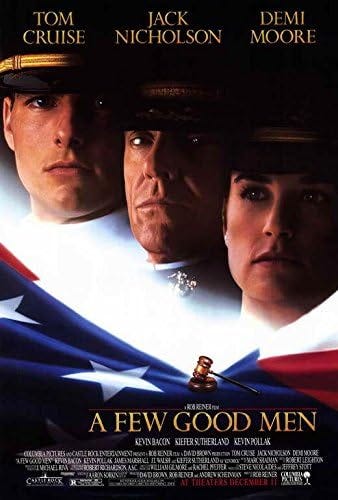
Then comes the case of Dawson and Downey.
Two Marines stand accused of murdering a fellow Marine, Private Santiago, during a “Code Red”—an unofficial, violent punishment. They maintain they were following orders. Whether they’re right or wrong doesn’t initially interest Kaffee; he just wants to negotiate them down to a 16-month sentence and go home.
But Dawson and Downey refuse to plead guilty. They want their day in court.
Commander JoAnne Galloway (Demi Moore) sees through Kaffee’s slick exterior. She believes he is the wrong man for the case—too pragmatic, too interested in his win-loss record, and too afraid to face his father’s legacy in the one place it matters: the courtroom.
Kaffee’s choice is clear: quit and maintain his unblemished record, or go to trial and risk everything—his reputation, his career, and the carefully constructed wall he’s built to keep his father’s ghost at bay.
THE LESSON: THE SUCCESS TRAP
We spend so much time fearing failure that we miss the far more insidious threat: being marginalized by our own success.
Kaffee isn’t failing. By every metric the JAG Corps values, he’s winning. Best record in the division. Respected by his peers. On track for a lucrative private sector career. He’s found a system that works, mastered it, and now he’s coasting.
But he’s winning at a game that doesn’t require him to grow.
This is what I call the Success Trap.It’s the danger that comes not from losing, but from winning so consistently at one level that you stop looking for the next one.
Here’s how it works: When you start any endeavor—a career, a business, a creative pursuit—you stumble. You fail. You don’t know what you don’t know. So you take risks because you have to. You’re hungry. You’re desperate to prove yourself. You’re willing to try anything.
Then you find your footing. You get good at something. You start winning. You taste success. And suddenly, the validation feels incredible. You were right to believe in yourself. The plan is working. The smooth sailing begins.
This is the most dangerous moment in your career.
Because now you have something to lose. You’ve found a comfortable perch where the breeze is easy and the living is good. You’ve got a few notches on your belt. Maybe you’re making money. Maybe you’ve got a plan for the next few years that looks pretty damn good on paper.
And then life throws you an opportunity disguised as an obstacle. A chance to level up. A chance to go from junior varsity to varsity. A chance to take on a new challenge that will stretch you beyond your current capabilities. A chance to step into the courtroom of life.
We think the problem is fear of failure. We think people shrink from these moments because they’re afraid they won’t succeed.
I don’t buy it.
Most people might not like feeling afraid but when push comes to shove fear is a great motivator. In the end, they might try to hide from what frightens them—including failure—but eventually that fear prods them forward, either by that time they figure they have nothing to lose, or because they come to realize what Walter White (Bryan Cranston) figured out in Breaking Bad…
“It’s that fear that’s the worst of it. That’s the real enemy.”
So, if it’s not fear of failure, that stops people from accomplishing their dreams, then what is it?
If you ask me, I think people miss more opportunities because they’re successful than because they’re afraid.
What do i mean by that?
Success breeds complacency. Once you’ve found a system that works, the last thing you want to do is risk it by trying something harder.
Kaffee could make the argument in court. He’s smart enough. Talented enough. But that would require him to risk his perfect record. That would mean stepping out of the comfortable role he’s mastered and into an arena where he might actually lose.
So he stays in the hallway, cutting deals, collecting wins that don’t matter. He’s being marginalized by his own success.
THE SCIENCE: THE COMFORT ZONE PARADOX
Psychologists have a term for this: the Comfort Zone Paradox.
When we’re inside our comfort zone, we feel safe. Stress is low. Confidence is high. But growth requires discomfort. The moment you stop challenging yourself, you stop developing new skills. Your competence in one area becomes a ceiling that prevents you from reaching the next level.
Dr. Alia Crum at Stanford studies what she calls “mindset about stress.” Her research shows that people who view stress as debilitating tend to avoid challenging situations. But people who view stress as enhancing—as a signal that they’re growing—actively seek out situations that stretch them.
Kaffee has developed what Carol Dweck would call a “fixed mindset” about his career. He’s proven he’s good at plea bargains. That’s his identity now. To step into a courtroom would mean admitting he doesn’t know if he’s good at trial law. It would mean risking the image he’s built.
The irony is that the only way to know if he’s actually a great lawyer—the kind his father was—is to risk being wrong.
THE LESSON IN OTHER MOVIES
Moneyball (2011): Billy Beane (Brad Pitt) was a first-round draft pick who became a mediocre player. He’s now a general manager using the same old scouting methods everyone else uses. Then economist Peter Brand shows him a new system—one that threatens every traditional baseball scout in the business. Beane has to choose: stick with what’s comfortable (and keep losing), or adopt a radical new approach that might get him fired. He chooses the risk.
The Founder (2016): Ray Kroc (Michael Keaton) is a struggling milkshake machine salesman in his 50s. He’s comfortable enough—he’s got a routine, a house, a wife. Then he visits the McDonald brothers’ restaurant and sees a system that could change everything. But scaling it would mean risking his entire life savings, his marriage, his reputation. Most men his age would stay comfortable. The lesson: Comfort is the enemy of legacy.
THE TRANSGRESSION: THE COMFORTABLE PERCH
The transgression isn’t fear. It’s complacency.
It’s settling for a “nice perch where the breeze is easy.” It’s becoming so good at one thing that you stop asking if it’s the right thing. Kaffee’s real crime isn’t that he won’t take the case. It’s that he’s forgotten what he was supposed to be doing in the first place. He became a lawyer to pursue justice, to follow in his father’s footsteps. Instead, he’s become a dealmaker who avoids the one place where justice actually happens: the courtroom.
This is what happens when you let success at one level become an excuse not to attempt the next.
In my own life, I experienced this at AMC. I was part of the team that developed Breaking Bad, Mad Men, and The Walking Dead. It was the best job in television. Everybody wanted to talk to me. I could have stayed there for the rest of my career. It was comfortable.
But I knew if I stayed, I would stop having an adventure.
I had this opportunity to run Legendary Entertainment. It was a big swing—Warner Brothers deal, starting a TV division, working for the producer that made Christopher Nolan’s The Dark Knight at perhaps the best studio in Hollywood. Within a year, I knew it wasn’t going to work. The company was at odds with their studio. It was contentious. It was hard.
But I didn’t regret leaving AMC. Because if I had stayed, I would have become the thing Tim Ferriss warns about in The 40 Hour Work Week: the fat guy in the red BMW. Successful on paper. But no longer growing. Hollow in spirit. Waylaid by continual, comfortable wins.
I always wanted to start my own business. I knew if I didn’t take that shot, I never would. So I left Legendary and started producing on my own. I wanted to see if the skills I’d learned would translate. They did.
Then I went back to writing—which seemed ridiculous because who wants to be the writer in Hollywood? But I had stories to tell. I didn’t want my goals to fall by the wayside just because I’d found a comfortable perch.
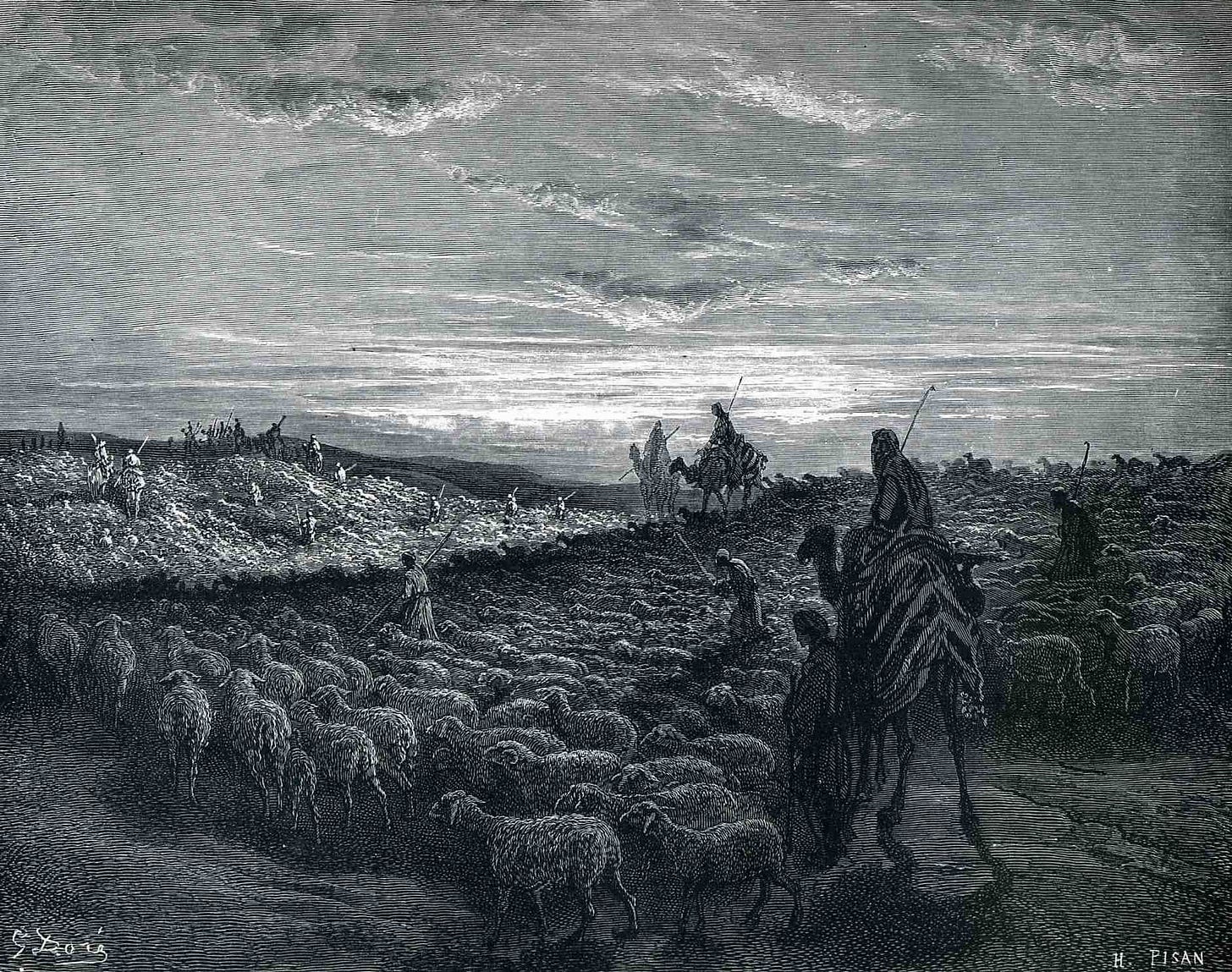
This is not a new idea. The principle is ancient, because people have always been people. It’s biblical, literally, the Old and the New. In the Book of Genesis, God says to Abraham, “Lech-Lecha”—”Go forth.” Abraham really doesn’t need this command. He is doing great. He’s comfortable living at his parent’s house. He doesn’t need to leave. But God calls him to leave his house, his country, and go to a place he’s never seen. He went on to become the father of the three major monotheistic religions: Judaism, Christianity, Islam.
There is a parallel in the Galilean tradition, in (Matthew 4:18-22, Mark 1:16-20), the tale is of four men standing by the shore, tending to their nets. They were successful men, masters of their craft. But when a higher calling echoed across the water, they did something radical: they dropped their nets and followed an itinerant teacher named Jesus. They didn’t wait for a better season or a guarantee of a catch. They recognized that their “nets”—the very things that provided their livelihood which kept them in comfort and identity—were also the things keeping them tied to the shore.
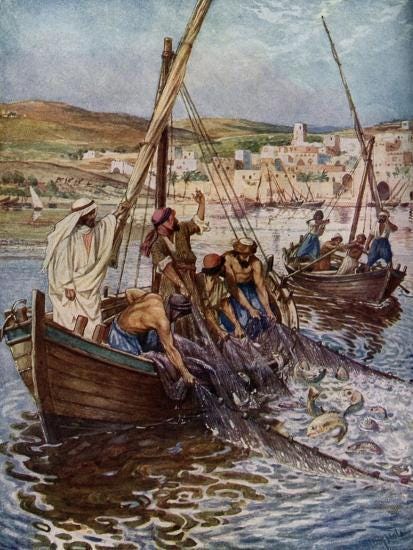
To say this was risky in the Roman empire at that time is to put it mildly. However, like Abraham, they understood that you cannot discover new oceans until you have the courage to lose sight of the familiar dock.
You have to get up. You have to make a stand. You have to have an adventure.
THE DIRECTOR’S CUT: LEAVE THE HALLWAY
Today’s Action: Identify where you’ve built a comfortable perch—and decide if it’s time to step into the courtroom.
1. The Original Objective Audit
Paulo Coelho’s The Alchemist tells the story of a shepherd boy who never loses sight of his original objective: to find his Personal Legend.
What was the dream before you got comfortable?
What courtroom have you been avoiding because the hallway pays better?
What trial have you been plea-bargaining your way out of?
Success metric: You’ve written down one goal you’ve let slip because you found a comfortable alternative.
2. The Comfort Perch Test
Identify the ONE area of your life where you’re winning at a game that no longer challenges you.
Am I winning at a game that has become too easy?
Am I avoiding a “trial” because I’m afraid of losing my “record”?
The Action: Write down three specific ways your current success is preventing your next level of growth.
There’s a story (possibly from Dale Carnegie) about a man whose objective was to be Thomas Edison’s partner. He turned down a “great” job because his objective wasn’t to be comfortable; it was to be Edison’s partner.
Success metric: You’ve identified at least one place where your current wins are preventing your next-level growth.
3. The JFK Question
President Kennedy said: “We choose to go to the moon not because it is easy, but because it is hard.”
The Action: Make one decision this week that prioritizes growth over comfort.
Apply for the role that scares you.
Pitch the project you’ve been “not ready” for.
Take the case to trial instead of settling.
Success metric: By the end of this week, you’ve taken one action that makes you slightly uncomfortable because it requires you to grow.
4. The Lech-Lecha Principle
Identify one “house” you need to leave—not literally, but metaphorically.
The job that pays well but kills your soul.
The relationship that’s easy but going nowhere.
The identity you’ve built that no longer fits who you’re becoming.
Success metric: You’ve identified the “house” you’re living in that’s become a prison. You’ve set a date to leave.
THE BOTTOM LINE
Kaffee’s problem wasn’t that he couldn’t handle the courtroom; it was that he’d gotten too good at avoiding it. He was being marginalized by his own success.
He could have protected his record and stuck to the plan. But if he had, he would have woken up as successful on paper, but hollow in spirit. Instead, he stepped into the courtroom. He risked his record. He went after Colonel Jessup (Jack Nicholson) and demanded the truth.
More importantly, he proved to himself that he was more than a dealmaker hiding in his father’s shadow.
The same is true for all of us.
We’re waylaid more often by complacency than by failure. But sitting is not the same as arriving. Comfort is not the same as fulfillment. Success at one level is not the same as greatness.
You have to get up. You have to leave your house. You have to make a stand. You have to step into the courtroom. You have to have an adventure.
Because the alternative isn’t success. It’s just a slower way to fail.
“So, this is what the inside of a courtroom looks like.”