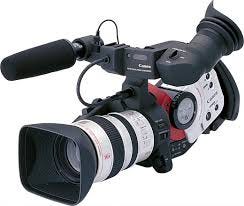
When Danny Boyle (https://www.imdb.com/title/tt0289043/) and cinematographer Anthony Dod Mantle (https://www.imdb.com/name/nm0002578/) filmed 28 Days Later, (https://www.imdb.com/title/tt0289043/) they used a four-thousand-dollar Canon XL-1 digital camera.
Variety’s Derek Elley dismissed the digital approach entirely, writing that Boyle and Dod Mantle “build no real case for shooting digitally rather than on 35mm.” The general consensus was that digital would never replace film—it was too grainy, too low-res, too “cheap”. (https://variety.com/2002/film/reviews/28-days-later-1200545225/)
What the critics missed was that the Canon XL1 wasn’t just a budget alternative to film—it made shots possible that would have been impossible otherwise. The cameras were smaller and more maneuverable than traditional film cameras. Boyle could film the iconic empty M1 motorway scenes only because a mobile police roadblock could hold traffic briefly. A traditional film crew would have needed hours of setup time, permits, and massive logistics.
The technology didn’t just reduce cost. It expanded creative possibility.
Now, twenty-five years later, that “cheap” movie has spawned a massive franchise, and nearly every movie and television show on the planet is shot on digital.
What’s the point?
Every new technology offers opportunity as well as potential drawbacks. Often, which is which is determined by the mindset of the person holding the camera.
As a storyteller, my primary concern is friction. I want the shortest path between the vision in my head and the image on the screen and I want to get it there with the least amount of friction impeding or altering that vision.
Right now, that path is being rewritten by AI.
THE PRECISION OF THE VISION
David Fincher is a director with meticulous precision. When he was shooting Seven on film, he wanted to see “into the blacks”—to find detail in the deepest shadows. He’d tell his cinematographer, Darius Khondji, exactly what he needed, but when the film was processed a day later, it was grainy. The detail wasn’t there.
Film doesn’t always see what the mind sees. But when Fincher moved to digital, he could craft the image precisely as he imagined it. For a perfectionist, the tool wasn’t just a convenience; it was a bridge.
I saw this same tension firsthand at AMC. We were working on Mad Men and Breaking Bad simultaneously. The network wanted Mad Men on 35mm film because digital, in 2007, still looked like soap operas and broadcast news.
But when Breaking Bad came around, Sony pushed for digital. Nearly all my fellow AMC execs were against it. They felt the cinematic look of Mad Men could only be achieved shooting on film. I argued strongly for digital. I’m a student of history and a lover of cinema, and cinema has always been shaped by the adoption of new tools—from the introduction of sound to Technicolor to the Steadicam.
Ultimately, we brought in John Toll—an Academy Award-winning cinematographer—to craft a look that became iconic.
The genie was out of the bottle. You can’t put him back.
THE DEMOCRATIZATION OF OZ
AI is here to stay. The idea that Hollywood will suddenly put the brakes on technological advancement is, frankly, ridiculous.
I don’t support using AI as an “acquiescence to circumstance”. I use it because I believe in it. It removes the friction between the scenes in my head and the page in front of me.
Every step of our process is already touched by technology—from the Mac you’re typing on to the iPhone you’re dictating into. To suggest AI should “sit this one out” is not just silly; it’s precarious. While we debate the ethics, an entire generation of creators on YouTube is already using these tools to build their own studios.
Think back to 1939. Imagine an audience watching The Wizard of Oz for the first time. Dorothy steps out of her house, and Munchkinland bursts into bright Technicolor. It must have blown their minds.
That is the AI moment. It’s the feeling of a world suddenly expanding from black-and-white into a world of infinite color.
THE HUMAN IN THE MACHINE
Let’s be clear: AI will not usurp human beings. Sam Altman was once asked if an AI will ever win the Booker Prize. The answer is no, because we don’t read stories to hear from algorithms; we read them to find humanity.
Digital cameras didn’t turn everyone into Danny Boyle or Anthony Dod Mantle or James Cameron. The tool expanded possibility, but craft still mattered. Vision still mattered.
AI is the same. It’s not intelligent. It has no consciousness. It’s a machine that processes patterns. But in the hands of someone with a story to tell, it removes friction between imagination and execution.
The question isn’t whether AI will replace filmmakers. It’s whether filmmakers will use AI to tell stories that couldn’t be told before.
AI will undoubtedly contribute to the world of derivative, cheap knockoffs. But the shows that resonate—the ones that become part of your cultural memory—will be written by human beings making use of AI tools.
I use it every day. I dictate my first drafts into my phone, and AI cleans up the “ums” and “ahs”, punctuates, formats, and does the initial line edit before a human editor ever sees it. I do this because I have three children, and in addition to writing books and scripts, I’m developing and producing TV shows. As Jeremy Allen White reminds everyone on The Bear: “every second counts.”
When I first tried dictation, I used Dragon software. With all due respect, it was cumbersome—it took more time to clean up the transcription’s mistakes than to just write on my laptop. But the technology improved. Now I drop my 20-30 minute dictation sessions into Otter.ai and voila! A perfect transcription. Another pass by Claude or ChatGPT cleans up the sentences I repeated while trying different ways to word a thought, or it formats my script dialogue—because when I’m dictating, I’m simply speaking in the voices of my characters.
When I wrote my heist novel, The Crew (Eddie Ankin Book3) I used AI to verify how elevators in the Empire State Building work during a fire alarm. It’s research. It’s diligence.
My point is there is no line between “creativity” and “technology.” There never has been.
THE CHALLENGE FOR 2026: CRAWFORD
In late 2025, I dipped my toe into this pool with a series called Survive the Night. It was written by a Hollywood screenwriter, but every shot and image was generated with AI. We ended up with 13 episodes that, for a first effort, weren’t half bad.
Now, I’m going all in.
The challenge for 2026 is our new series: Crawford. This will be a weekly, broadcast-length series on YouTube produced by me and my partner, Sean Canino. It is a test case. Our goal is to use AI to render a cinematic, broadcast-quality series that is indistinguishable from traditional filmed television.
Orson Welles said that the “lack of limitations is the enemy of creativity”. AI has its limitations, just like Boyle’s four-thousand-dollar camera did in 2002. But rather than fret about what might happen in the abstract, we are choosing to be the pioneers.
Somebody is going to be the Danny Boyle of AI. Someone is going to use this technology to create the next 28 Days Later.

Maybe it’s you. Maybe it’s me.
I invite you to follow along. Every week, I’ll be posting updates here on social media at https://x.com/CanElStudios, on my webpage www.eliceislandent.com and on my substack — The AI Showrunner: Chronicling the production of a broadcast-quality series using generative AI — documenting the wins, the failures, and the workflow as we build Crawford.
Subscribe below:
 The A.I. ShowrunnerChronicling the production of a broadcast-quality series using generative AI.By Jeremy Elice