
“I never did mind about the little things.”
THE STORY
In John Badham’s 1993 film Point of No Return—the American remake of Luc Besson’s La Femme Nikita—Bridget Fonda plays Maggie, a violent drug addict given an impossible choice: become an assassin for the government or die in prison. Her mentor, played by Anne Bancroft, teaches her more than just how to kill. She teaches her how to survive in high society.
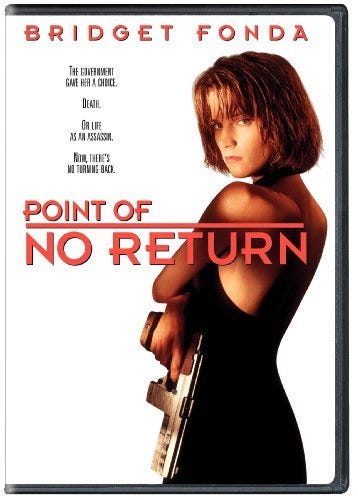
During an etiquette lesson, Bancroft gives Maggie a secret weapon for social survival. She tells her that if she ever feels cornered, confused, or out of
control, she doesn’t need to panic. She just needs to use a specific fail-safe. She gives her a mantra. A mental trigger for when things spiral out of control.
Her instruction is simple: Smile warmly and say, “I never did mind about the little things.”
Bancroft explicitly tells her that it doesn’t matter if the phrase fits the conversation. “It doesn’t even have to make fit the situation,” she says.
The phrase isn’t about communication; it’s about deflection. It’s a verbal shield. By smiling and delivering this line—regardless of the context—Maggie creates a barrier. She disarms the other person, hides her own anxiety, and instantly reclaims the high ground.
It’s a trick to kill the tension and keep her ego in check. If you can smile and dismiss the moment as a “little thing,” you remain the one in control.
This isn’t about being zen. It’s about survival. And more importantly, it’s about power.
Because if you never do mind about the little things—if you’re somebody who won’t react in anger, won’t blow your stack, won’t get upset or rage—you become someone who’s always in control.
And if nobody can provoke you, nobody can control you.
Later in the film, when Maggie meets Dermot Mulroney’s character and begins developing real feelings for someone, he notices something about her. He says something about not wanting to embarrass her.
Her response: “I don’t get embarrassed.”
He looks at her knowingly: “It’s a new trick. You’ll have to teach it to me sometime.”
This mindset—this detachment from ego—is what enables Maggie to survive her own assassination attempt. It’s also what allows her to break free from the control of the shadow agency that trained her.
This is the power of the lesson. When you kill your ego, when you truly stop minding about the little things, you become the most dangerous person in the room. Not because you’re violent, but because you can’t be manipulated. You can’t be provoked. You can’t be controlled.
THE LESSON: KILL THE EGO
Miyamoto Musashi, the legendary Japanese swordsman who wrote The Book of Five Rings, spent his life tempering his anger because he understood something most of us never grasp:
Ego is weakness.
The more you feed your ego, the weaker you become.
Musashi’s solution was radical—and identical to Maggie’s training: kill the ego. Burn it. Starve it.
He didn’t care if people liked him. He didn’t care if his name echoed through history. He didn’t worry about validation, status, fancy clothes, or approval. He didn’t smile and seek recognition.
Why?
Because he realized the more you crave these things, the easier it is to control you.
When you attach your ego to how people see you, you give them the power to break you. Your identity becomes dependent on their perception, which means every insult is a wound, every criticism is an attack, every rejection is a crisis.
Musashi walked through the world free, detached, silent. He understood that a man with nothing to prove is a man no one can provoke.
When you kill the ego:
Insults become noise
Criticism becomes information
Rejection becomes irrelevant
Anger dies because there’s nothing left to defend
IT’S NOT ABOUT YOU
The key insight isn’t that you don’t care about the important things—your family, your children, your work. It’s that you don’t allow yourself to believe that these indignities of life, big and small, these challenges, these pushbacks, these insults, and yes, even these injuries at the hands of others, are necessarily about you.
They’re not.
This is easy to see when you think about your kids. Yes, they’re acting up. Yes, they’re being disobedient. Yes, it’s an inconvenience for you. But it’s not really about you. They’re not doing this as a way of hurting you or getting back at you for anything—not when they’re young, anyway. It’s about them.
It’s easy to be patient with children. It’s much harder when it’s your boss who’s treating you badly, or an employee failing at their job, or a stranger getting under your skin. In those moments, your ego screams that it is about you.
That is the trap.
In reality, if you can control your own ego and realize that none of this is about you, then you won’t get upset. This allows you to stick to your plan and move through your day unshaken.
Over the course of time, this allows you to accomplish the things you need to accomplish in your life. And when there is friction—which is inevitable—when there are obstacles, setbacks, challenges, insults, and injuries, you won’t be thrown completely off your game. You won’t be blinded to opportunities by the rage you feel.
THOSE WHO MASTERED IT
George Washington
During the Revolutionary War, Washington faced constant criticism from Congress, betrayal from his own officers, and the humiliation of repeated defeats. His ego could have driven him to rashness, to defensive posturing, to proving himself through risky battles.
Instead, he practiced strategic patience. He endured insults from his own side. He let smaller battles go. He focused on the larger war, not the smaller wounds to his pride.
When the Newburgh Conspiracy threatened to turn the army against Congress—when his own officers were ready to mutiny—Washington didn’t rage or threaten. He simply read a letter, paused to put on his glasses, and said: “Gentlemen, you will permit me to put on my spectacles, for I have not only grown gray but almost blind in the service of my country.”
That simple act of vulnerability—admitting weakness instead of defending his ego—defused the entire crisis.
Washington’s ability to control his ego, to not mind about the little things, allowed him to see the bigger picture and ultimately win both the war and the peace that followed.
Warren Buffett
Buffett has built a fortune by never letting his ego drive his investment decisions. When people mocked his refusal to invest in tech stocks during the dot-com bubble, he didn’t get defensive. He didn’t feel the need to prove them wrong in the moment.
He simply said: “I don’t invest in things I don’t understand.”
While others let their egos push them into bad investments (afraid of missing out, afraid of looking stupid, needing to prove they were smart), Buffett sat on the sidelines. He never did mind about the little things—like looking foolish or being called old-fashioned.
When the bubble burst, he was vindicated. But even then, he didn’t gloat. Because his ego wasn’t invested in being right. It was just about making good decisions.
THOSE WHO DIDN’T
Napoleon Bonaparte
Napoleon’s greatest victories came when he controlled his emotions and made strategic decisions. His greatest defeats came when his ego took over.
The invasion of Russia in 1812 was driven by ego. He couldn’t accept that Tsar Alexander I had pulled out of their alliance. He couldn’t let that insult stand. He couldn’t mind about the “little thing” of diplomatic rejection.
So he marched 600,000 men into Russia in winter. Only 100,000 came back.
His ego demanded he prove his power. It cost him everything.
Richard Nixon
Nixon’s political brilliance was undeniable. His strategic mind reshaped American foreign policy. But his inability to control his ego—his need to punish enemies, to prove himself, to win every small battle—destroyed him.
Watergate wasn’t about a real threat. It was about ego. About not being able to let the “little thing” of political opposition exist without retaliation.
He couldn’t say “I never did mind about the little things.” Every slight was personal. Every criticism was an attack. Every loss was a wound that demanded revenge.
And in the end, his ego destroyed his presidency.
THE LESSON IN OTHER MOVIES
The Dark Knight (2008)
The Joker’s entire plan depends on making Batman lose control. He attacks Batman’s identity, trying to prove that even the most principled hero can be broken by rage.
Batman’s power isn’t his physical strength or his gadgets. It’s his ability to maintain control when provoked. The Joker loses because Batman refuses to let ego—or rage, or revenge—dictate his actions.
The film’s lesson: The person who can’t be provoked is the person who can’t be beaten.
No Country for Old Men (2007)
Anton Chigurh is terrifying precisely because he has no ego. He doesn’t get angry. He doesn’t take things personally. He doesn’t need to prove anything. When someone insults him or tries to manipulate him, it simply doesn’t register.
This makes him unstoppable. There’s no emotional lever to pull. No ego to exploit. No button to push.
The film shows us the dark mirror of ego-death: when you remove all emotional attachment, you become capable of anything. Chigurh is what happens when someone truly never minds about the little things—or the big things, for that matter.
THE CONFESSION
If there’s any lesson I’ve failed at most in my life, it’s this one.
I’m plagued by a genetic temper. When I’m exhausted, hungry, or provoked, I can fly off the handle. This is a loss of control. A tantrum of the ego. My inner fire burning out of control.
I’ve tried to justify it my entire life. I’ve claimed there are times when anger is justified, times when it’s focusing, times when it’s righteous.
But all of this is wrong.
I failed to heed the lesson being taught in Point of No Return. Every time I let my ego react to the “little things”—the traffic, the incompetence, the disrespect, the thousand small cuts of modern life—I gave away my power.
I gave someone else control over me.
🎬 THE DIRECTOR’S CUT
Create Your Mental Trigger
Maggie had “I never did mind about the little things.” You need your own version. Not a fluffy affirmation—a hard reset phrase that snaps you out of ego-driven reaction.
Examples:
“Not about me.”
“Doesn’t matter.”
“Let it go.”
“Bigger picture.”
Write it down. Say it out loud 10 times right now. The next time you feel your ego flare up—someone cuts you off in traffic, someone criticizes your work, someone disrespects you—say your phrase. Out loud if you can. In your head if you can’t. Use it like Maggie used hers: as an audible reset button.
The 10-Second Rule
When something triggers you, count to 10 before responding. Not to calm down—to give your rational brain time to override your ego.
During those 10 seconds, ask yourself: “Will this matter in a year? In a month? In a week?”
If the answer is no, it’s a little thing. Let it go.
The “Not About Me” Test
When something upsets you, ask: “Is this actually about me, or am I making it about me?”
Your kid won’t eat dinner → Not about you. They’re learning boundaries and control.
Your boss snaps at you → Not about you. They’re stressed about their own problems.
Someone criticizes your work → Not about you. They’re giving you information (even if it’s delivered poorly).
The stranger who’s rude → Definitely not about you. You’re just a convenient target for whatever they’re dealing with.
Once you realize how little is actually about you, your ego has nothing left to defend.
Remember: God Is Running the Show
One of the heaviest burdens ambitious and motivated people carry is the belief that everything is their responsibility all the time. Every failure is personal. Every setback is a reflection of their inadequacy. Every problem demands their immediate solution.
This is ego disguised as responsibility.
The truth is: Just like it’s not all about you, it’s not all up to you.
There are forces beyond your understanding. Circumstances at play beyond your control. Events unfolding according to a larger plan you can’t see.
When your kid gets sick and ruins your work schedule—God is running the show.
When your carefully planned project gets derailed by factors outside your control—God is running the show.
When someone betrays you, or the market shifts, or the opportunity evaporates—God is running the show.
This doesn’t mean you don’t take action. It doesn’t mean you don’t work hard or plan carefully. It means you do your part, and then you release your grip on the outcome.
When you remember this, you stop trying to control everything. You stop taking every setback as a personal failure. You stop letting your ego convince you that you’re responsible for outcomes you can’t control.
This week, when something goes wrong that’s outside your control, say it out loud: “God is running the show.” Not as resignation, but as release. You did your part. The rest isn’t yours to carry.
Practice With Low Stakes
You can’t learn ego control in a crisis. You have to practice with small things first.
Next time someone cuts in line, let them. Next time someone takes your parking spot, let it go. Next time someone’s wrong on the internet, don’t correct them.
These are your training reps. You’re building the muscle that says: “I never did mind about the little things.”
When the big things come—and they will—you’ll have the strength to let those go too.
THE BOTTOM LINE
Bridget Fonda’s Maggie learned that the most dangerous person in the room isn’t the one with the most weapons or the most training. It’s the one who can’t be controlled. The one whose ego can’t be manipulated. The one who never minds about the little things.
Miyamoto Musashi spent his life killing his ego because he understood that every attachment, every need for validation, every moment of pride was a weakness an opponent could exploit.
George Washington won a war and built a nation because he could endure insults, absorb criticism, and focus on the mission instead of defending his pride.
Napoleon lost everything because he couldn’t let a diplomatic slight go. Nixon destroyed his presidency because every criticism felt personal.
The pattern is clear: ego is weakness. Detachment is strength.
This doesn’t mean you don’t care. It means you don’t let your ego decide what you care about. You choose where to burn your fire, instead of letting every small provocation ignite you.
When someone insults you, cuts you off in traffic, disrespects you, criticizes you—they’re not attacking you. They’re testing whether they can control you.
The answer should always be no.
I never did mind about the little things.
It’s not about suppressing your fire. It’s about choosing where you burn.