“Nothing’s impossible.”
Stephen Baldwin says this in The Usual Suspects when the crew is caught between a literal rock and a hard place. Keyser Söze on one end, an impossible boat job on the other. They’re staring at certain death either way.
And Baldwin’s character—Michael McManus—just shrugs and says: “Nothing’s impossible.”
He’s not being cocky. He’s stating a fact.
And the movie proves him right. Because The Usual Suspects is a film about impossibility. It has the most impossible twist in cinema history: the devil convincing the world he doesn’t exist.
That’s impossible. Until it isn’t.
So the question becomes: What allows someone to develop a mindset that nothing is impossible? Anybody can say those words. But how do you say it without sounding cocky, overconfident, or arrogant?
The answer is in the movie itself: You have to develop a force of will.
THE STORY
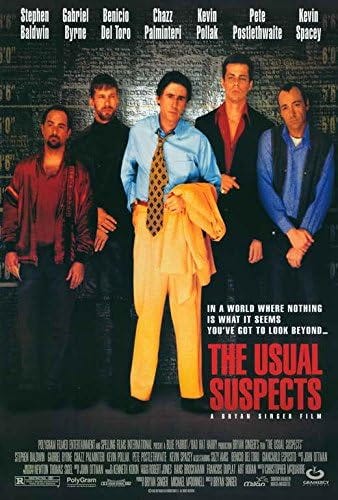
The Usual Suspects, directed by Bryan Singer and written by Christopher McQuarrie, tells the story of five criminals brought together for a seemingly random police lineup in New York City. Dean Keaton (Gabriel Byrne) is an ex-cop turned criminal trying to go straight. Michael McManus (Stephen Baldwin) is a hothead thief. Fred Fenster (Benicio del Toro) is McManus’s partner. Todd Hockney (Kevin Pollak) is an explosives expert. And Roger “Verbal” Kint (Kevin Spacey) is a small-time con artist with cerebral palsy.
The police have no evidence. The lineup is harassment. But it plants a seed.
The five men decide to work together, pulling off a series of escalating jobs. They’re good at what they do. They’re making money. They’re winning.
Until they’re not.
A lawyer named Kobayashi appears with a message from Keyser Söze—a legendary criminal mastermind whose name alone inspires terror. Söze claims the five men stole from him years ago. Now he wants payment: they must rob a boat docked in San Pedro Harbor. The boat is carrying $91 million in cocaine and is guarded by armed men. There’s no clear escape route.
If they refuse, Söze will kill them and everyone they love. If they attempt it, they’ll probably die.
It’s impossible either way.
But McManus says: “Nothing’s impossible.”
And they go.
Keaton is especially vulnerable. He’s trying to go straight for his girlfriend, Edie Finneran (Suzy Amis), a lawyer who believes he’s reformed. Söze knows this. Söze knows everything. And Söze uses it.
The twist, of course, is that Keyser Söze has been there the whole time. Verbal Kint—the crippled, harmless storyteller—is Söze. He’s been controlling the entire narrative, convincing everyone (the cops, the audience, his fellow criminals) that he’s weak, powerless, insignificant.
The greatest trick the devil ever pulled was convincing the world he didn’t exist.
This is impossible. Until you have the will to make it possible.
THE LESSON: FORCE OF WILL
Keyser Söze is described in the film as a man who had will unlike other people. As Verbal tells it: “He showed these men of will what will really was.”
Söze was willing to do things other men thought impossible. Things other men would never do.
In the story’s most chilling moment, we learn that when Hungarian gangsters threatened Söze’s family to gain leverage over him, Söze didn’t negotiate. He didn’t comply. He didn’t try to save them.
He killed them himself. His wife. His children. All of them. Then he killed the Hungarians and everyone connected to them.
Why? To prove that he had no leverage. No attachments. No weaknesses.
He severed every connection that could be used to control him.
This is the dark mirror of force of will. It’s what happens when someone commits entirely to the idea that nothing—not love, not family, not morality—will stand in the way of their objectives.
Now, if you’re looking to become a villain, a bogeyman, a Keyser Söze, then maybe that’s the way to go. But most of us aren’t. Most of us have things we love. People we’d die for. Attachments that matter.
And that’s exactly why our force of will must be even stronger.
THE CODE: ROGUES WHO WALK AWAY
There’s a philosophy that runs through some of my favorite crime films. A code for men who live outside the law but still operate by rules.
In Heat, Neil McCauley (Robert De Niro) lives by a simple principle: “Don’t let yourself get attached to anything you are not willing to walk out on in 30 seconds flat if you spot the heat around the corner.”
This same philosophy echoes in Michael Mann’s earlier film Thief, when Frank (James Caan) burns down his own life—his bar, his house, everything he’s built—right before he takes revenge on the people who sought to use that life against him.
These men survive because they’re willing to sever attachments when necessary. They can walk away from anything. They have no leverage points.
But here’s the problem: Most of us are not thieves, rogues, or samurais.
We have families. We have businesses. We have people and things that impose constraints and limitations on our lives. Things we’re not willing to walk away from in 30 seconds.
And that’s not weakness. That’s humanity.
But it means our force of will must come from somewhere else.
ANCHOR YOURSELF IN SOMETHING BIGGER
If you have attachments—if you have people you love and things you’re not willing to abandon—then your force of will cannot come from detachment. It has to come from commitment to something bigger than yourself.
Keyser Söze’s will came from a willingness to destroy everything, including the people he loved. That’s one path.
But there’s another path: A willingness to do the impossible FOR the people you love.
This is the harder path. Because Söze’s path is actually easier—cut everything loose and you have no vulnerabilities. But protecting what you love while maintaining force of will? That requires more discipline, more sacrifice, more strength.
For me, that’s a belief in God. It’s a belief in family and a love of family and a willingness to do anything to protect them and make them strong and loving—including doing the impossible.
Tony Robbins talks about finding your “why”—the reason that drives you when motivation fails. Your force of will is built on that foundation. Not on what you’re willing to walk away from, but on what you’re willing to fight for.
However you find your source of strength—whether it’s faith, family, a mission, a calling—you have to use it to develop your force of will.
And force of will can only be developed through sacrifice and a willingness to put yourself in hard situations.
CHOOSE YOUR ATTACHMENTS WISELY
Here’s the critical nuance: Attachments can be good or bad, depending on who you attach yourself to.
You are the product of the five people you surround yourself with. Family and good friends? Keep those attachments strong. Lean on them. A mastermind group advising you on your craft or your business? Definitely keep those folks around and draw strength from them.
But the wrong attachments will destroy you.
Dean Keaton’s attachment to Edie should have made him stronger. But because he was living a lie—a criminal pretending to be reformed—that attachment became a vulnerability. Söze exploited it. Keaton died because he couldn’t reconcile who he was with who he claimed to be.
And the five criminals in The Usual Suspects? They needed more family and less of one another. They’re betrayed by one of their own—Verbal Kint, who turns out to be their bogeyman in the flesh.
This is the ultimate transgression of this facet of the lesson: they had the wrong attachments.
They surrounded themselves with criminals, with men operating outside any code. They trusted a man they didn’t know. And that trust—that attachment—got four of them killed.
If you’re going to anchor your force of will in your attachments, you better choose those attachments carefully. Because weak attachments don’t just fail to make you stronger—they make you weaker.
THE LESSON IN OTHER MOVIES
Cast Away (2000)
Chuck Noland (Tom Hanks) faces the ultimate impossible situation: solitary survival on a rock in the Pacific. He considers suicide—we see the rope, we understand the temptation. But he steps back.
Why? Because of his attachment to Kelly, the woman waiting for him back home.
His force of will drives him to knock out his own tooth with an ice skate. It drives him to build a raft and sail into a void with almost zero chance of rescue.
Söze’s will came from loving nothing. Chuck’s will came from loving someone. Both made the impossible possible.
Unbroken (2014)
Louis Zamperini survives a plane crash, 47 days adrift at sea, and years in a Japanese POW camp. He endures torture, starvation, and psychological warfare that breaks other men.
His force of will doesn’t come from detachment. It comes from attachment—to his family, to his country, to his identity as someone who doesn’t quit.
This is the other path. The one most of us need to follow.
THE DIRECTOR’S CUT
1. Do Hard Things Voluntarily
Söze’s will was forged in fire. You don’t have to wait for a crisis to build yours. Do one thing this week that sucks, purely because it sucks. A cold shower. A 5 AM run. Fasting for 24 hours.
When you do hard things voluntarily, you prove to your nervous system that you can handle hard things involuntarily. The body doesn’t know the difference between a cold shower you chose and a crisis you didn’t. It just knows you handled discomfort without breaking.
2. Keep Promises to Yourself
Your will is built on self-trust. And self-trust is built on kept promises.
Start small. Say you’ll run three miles? Run three miles. Say you’ll finish the project by Friday? Finish it by Friday. Every broken promise is a crack in your foundation. Every kept promise is a layer of steel.
3. Choose Attachments Consciously (The Integrity Audit)
In The Usual Suspects, Dean Keaton (Gabriel Byrne) tries to go straight for his girlfriend, Edie. But he is vulnerable to Söze because he is living a lie. He is a criminal pretending to be a lawyer. His attachment creates leverage because it is built on secrets.
Attachments are only weaknesses if you are hiding. If you live with total integrity—if you have nothing to hide—your attachments become your bedrock, not your vulnerability.
Audit your life: Where are you living a double life? Where are you keeping secrets? Close the gap. When you have nothing to hide, you have nothing to fear.
And audit your circle: Who are the five people you spend the most time with? Are they family, mentors, people who make you better? Or are they the wrong attachments—people who drain you, compromise you, or pull you toward your worst self?
Cut the wrong attachments. Strengthen the right ones. Your force of will depends on it.
4. Test Yourself Under Pressure
Most things we call “impossible” are just “untested.” Put yourself in a situation this month where failure is possible and public. Give a speech. Launch a product. Ask for a deal you might not get.
You aren’t trying to succeed; you are trying to inoculate yourself against the fear of the attempt. Launch the project even if you’re not sure it’s ready. Ask for the deal even if you think they’ll say no. The attempt is the point.
Because you don’t know what you’re capable of until you try something that might not work.
THE BOTTOM LINE
Stephen Baldwin’s character was right: Nothing is impossible. But saying it isn’t enough. You have to develop the force of will to back it up.
Keyser Söze proved that will can come from severing all attachments, from being willing to destroy everything—including the people you loved—to maintain control.
But Chuck Noland and Louis Zamperini proved there’s another path. A harder path. A path that requires even more will.
Anchor yourself in something bigger than yourself. Then develop the force of will to protect it, build it, and fight for it—no matter what.
But choose your attachments carefully. The five criminals in The Usual Suspects trusted the wrong people and paid with their lives. Dean Keaton loved the right person but lived a lie, and Söze used that lie to destroy him.
Your force of will isn’t built by cutting attachments. It’s built by choosing the right attachments—family, mentors, people who make you stronger—and then refusing to let anything, including impossibility, stand between you and protecting them.
Keep promises to yourself. Do hard things voluntarily. Test yourself under pressure. Build the muscle of will when you don’t need it, so it’s there when you do.
Because the boat job is coming. The impossible situation is coming. And when it arrives, the only question that matters is:
Do you have the will?