The trouble with feeling lost and disengaged in your own life is that you feel like you'll end up the same as everyone else.
But we are unique beings.
Our individual stories not only help us make sense of the world—they make our lives unique. Unique but relatable.
It feels like you're on this path all alone—and you may very well be — and that’s okay — but this is why we tell our story.
The question is: whose story are you living? Your parents'? Your spouses? The co-workers and friends you compare yourself to? Your own? When you don't know what your story is, that's the reason you feel lost.
You don’t know what you want.
You need to be clear on the story before you can act.
One way I do this and orient myself toward success is thinking of my life as a story.
🌟 Why You Should Turn Your Life Into a Story
1️⃣ Stories Are How We Make Sense of the World

As human beings, we're wired to think in terms of stories.
Our lives move forward on a timeline. But they also move forward on a storyline.
We don't always notice this because it's easy to get lost in the string of days. It's easy to feel like each day is just a succession of twenty-four hours blending together, only a vague notion of the things you’re chasing, and where you often don't accomplish what you want or wonder what you accomplished at all. Over time, the accomplishments we dream of seem far off and we lose motivation to pursue them.
Or we simply can’t see how.
This is where you need to start thinking of your daily life as a story
2️⃣ Our Lives Have Chapters
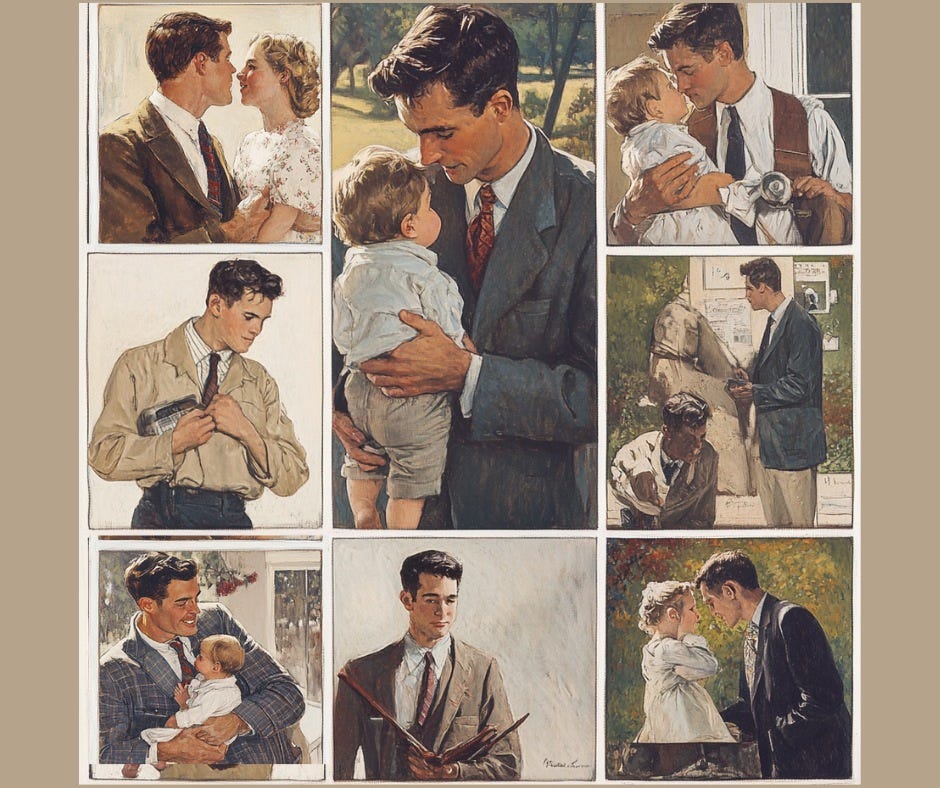
We talk about the chapters of our lives. This is an apt metaphor—our lives move through periods of time, place, and people. It's like the Beatles song:
"In my life, there are places I remember, faces I remember. Some have come and some have gone."
This applies daily too.
Maybe each day is a scene in your life's film.
Maybe there are scenes within each day—moments where the camera zooms in on what really matters.
This concept is beautifully illustrated in the m The Pursuit of Happyness, where Will Smith's character mentally divides his life into distinct chapters. In the film's emotional climax, after enduring homelessness and countless setbacks, and finally getting the job he worked so hard for, he declares with quiet determination: 'This part of my life is called winning.'
By consciously naming and recognizing these chapters, he maintains hope through desperate circumstances and ultimately transforms his story.
We can do the same.
I've lived long enough now—thank God—to look back and recognize distinct chapters in my own life, not just the obvious transitions between school and work or childhood and adulthood, but more specific moments that I know recognize as having the shape of stories, with triumphs and defeats, great loves won, lost, and found again, or times I was lost in the wilderness and has to find my way out.
I remember getting fired from the first two jobs I had. At the same time, I was starting to know NYPD detectives on a first-name basis, and eventually decided to leave town and head back to LA as a kind of reset.
But in my mind I saw the trip out west as akin to Bruce Wayne leaving Gotham or like every hero in every martial arts movie who has to leave the city to train with a Master in some faraway remote location.
I fancied myself on a quest. A mission.
I remember the first time I got paid significant money for a job.
I remember the first time I was responsible for producing a TV show that got on the air.
I remember getting married and how life changed after taking my vows.
Becoming a parent was another big chapter, with each child bringing their own unique story to my own.
This past Mother's Day, my 95-year-old grandmother, with whom I was very close, passed away. I reflected happily on the many chapters her life had. At the same time, my parents and my uncle bought a house together in the suburbs to be close to my family and my sister's family. As one door closes, another opens—chapters and scenes unfold.
If you can recognize these chapters, you gain clarity and find motivation in the larger story of your life.
3️⃣ Stories Are About Transformation
A story is about watching a character who wants something. Either they know what they want, they don't know what they want, or whatever they want requires them to change—to become a different person—in order to be worthy of achieving what they want.
We enjoy stories because they're about desire and transformation.
Between those two things are what we have to face: challenge, obstacle, hardship, setback.
To overcome these things, we make sacrifices. We give up things we would otherwise rather be doing to pursue what we want.
This forces us to change.
And change is good, because change is progress. It's how we move forward.
4️⃣ Stories Create Engagement
Thinking of your life as a story engages you. You want to be engaged in your life, not disconnected from it.
Stories come with the promise of something happening. Instead of thinking of each day as just another humdrum, not-much-to-write-home-about kind of day, think of it as a blank script waiting to be written, with potential for unexpected plot twists.
This engagement extends beyond just your day-to-day activities. When you're engaged with your own story, you become more attentive to details, more present in conversations, and more aware of opportunities that might otherwise pass you by.
You stop being a passive observer and become an active participant in crafting the narrative of your life.
5️⃣ Stories Give You Perspective

Thinking of your life gives you a little distance. When you're an audience member in a theater watching a movie, you're not holding on so tight. You ease back. You get sucked into the story. You let things happen.
This is good advice in general. Some of us are holding on too tight.
I'm not telling you to let go completely and lose your way. I'm talking about easing off the pedal. Take a breath. Don't be so hard on yourself.
Consider the difference between two approaches to the same situation: Jamie views each workday as "just another Monday" or "just another Tuesday"—an endless cycle of repetitive tasks. Meanwhile, Taylor sees each day as part of an unfolding story—"the scene where I'm developing skills for my future business" or "the part where I'm building important relationships." Years later, Jamie wonders where the time went, while Taylor can see the narrative arc of growth and purpose. Same external circumstances, completely different experience and outcomes.
6️⃣ Stories Prepare You for Conflict

When we watch a story, we expect characters to face obstacles—for there to be conflict. A story without conflict is no story at all.
Movies where characters come fully formed without flaws—are boring.
Because none of us are perfect. We are all flawed.
And that’s before you get to the fact that when we first attempt anything we rarely have a clue what we are doing or how to do it well.
And everyday in life is a first — there are going to be challenges, conflicts.
Prepare yourself.
We're all trying to improve, to get better, to move forward. Moving forward requires change—even if it's just learning new things or improving what we already know.
In the best stories, conflict isn't just something to endure—it's where the character grows. When you face a setback at work or a relationship challenge, try asking: "How is this conflict developing my character?" Instead of thinking "Why is this happening to me?" shift to "What is this developing in me?" This simple reframe turns problems from pure obstacles into opportunities for growth—just like in the most compelling stories we love.
When you think of your life as a story, you're not afraid of the conflict.
As the hero of your story, you expect to face hardship and obstacles. And just like in a good movie, you should expect to overcome them. You become interested in figuring out how.
What story are you currently telling yourself about your challenges? Is it a story of victimhood, or one of growth and overcoming? How might reframing that narrative change your approach to those same challenges?
Now that we understand why story-thinking is so powerful, let's explore how to actually implement this approach in your daily life—turning these concepts into practical tools for transformation.
🛠️ How to Think of Your Life as a Story
1️⃣ Engage Your Mind Differently

You might think, "But what happens when I can't figure it out? In movies, characters know what to do because someone wrote it for them."
That may be true.
But when you think of your life as a story, you engage your mind differently. Your mind starts answering questions on a subconscious level—the same way you receive stories.
Just by thinking this way, your mind is already working on solutions to problems you'll face in your day.
You might be thinking, "This sounds nice, but I live in the real world with real problems." I get it. Story-thinking isn't about escaping reality—it's about engaging with it more effectively. The bills still need paying, difficult conversations still need having. But approaching these challenges as part of your story gives you both creative distance and deeper engagement, making you more effective, not less.
When I’ve been behind the eight-ball
2️⃣ Know Your Objective
If you think of your day as a story, ask yourself:
What's the goal today?
What's the story about?
What am I trying to accomplish?
If you have no destination you never get where you are going.

For a real-world example, watch Casey Neistat's vlogs. He extracted a story from every day of his life.
Sure, those stories were often produced and heightened for entertainment—but he made stories from things he was doing daily. You got to know him, his family, his arc. And every episode — every day of his life — had an objective. A goal.
When you know your goal for the day, it's like setting a destination.
You can't get anywhere if you don't know where you're going.
That's what stops most people. They get out of bed, and by the time they're brushing their teeth, they're already confused about what to do and how to do it.
3️⃣ Visualize Your Day
Thinking of your life as a story teaches you to visualize.
If you're interested in self-help, you've heard about visualization and manifestation. These concepts take different forms with subtle differences.
But they boil down to picturing what you want to accomplish and seeing yourself doing it.
Brain science suggests the brain doesn't differentiate between something visualized and something actually done—the reward and learning are the same.
It's a cool concept. I've tried it myself with occasional success.
But it can be difficult. It often feels like it requires deep meditation, and we don't always have time for that.
If you think of yourself in a story, though, you're naturally visualizing your day.
What's the high point of today's scene?
Where will there be a setback requiring you to push forward?
Where in your day's story will victory be snatched from the jaws of defeat?
When you think about these things in the context of your day, life, relationships, and who you are versus who you wish to be—you're visualizing.
4️⃣ Take Risks

This prepares you to take risks—another important step in life.
You can't go anywhere if you're not willing to take risks.
I’m reminded of the punchline in the Rodney Dangerfield classic, Back to School. Speaking to the graduating class, he says:
"As you go out into the real world, my advice to you is—don't go. Move back in with your parents. Let them worry about it."
It’s tempting for anyone from any generation at any point in their life to avoid risk. But if you want to be the hero of your story, you can’t let fear of failure keep you on the sidelines.
I remember after a successful run as a television executive, I got fired from my first stint as a producer. I felt confident I could get another job, probably one that paid even more.
But I also knew it was time to do what I'd wanted for a long time—go into business for myself. To become a producer of my own stories. It was scary turning down offers from executives I respected, but then, two of them graciously offered me a producing deal instead.
Off that I launched my company, Elice Island Entertainment.
A couple years later, after getting my first show in production, I was flying back from Africa where we were shooting. My deal was expiring. I knew I could shop for a new deal confidently, but my experience as a producer made me recognize I was limited in telling the stories I truly wanted to tell—the reason I got into this business in the first place.
On that flight, I decided to become a writer—first a screenwriter, then an author. These risks dramatically changed my career path, but I am very happy with this choice. I am pursuing my life’s work, while able to stay home most days and be with my family.
Sure, there are still struggles—that's just life. The story rarely unfolds exactly as you imagined, and you've got to adapt along the way.
But taking risks is part of any meaningful decision.
The alternative? Standing still. And if you don't move forward, you can't get anywhere at all.
The point is—if you're going to be the hero of your own story, you can't be cowed by challenges.
⚔️ Becoming the Hero of Your Own Story
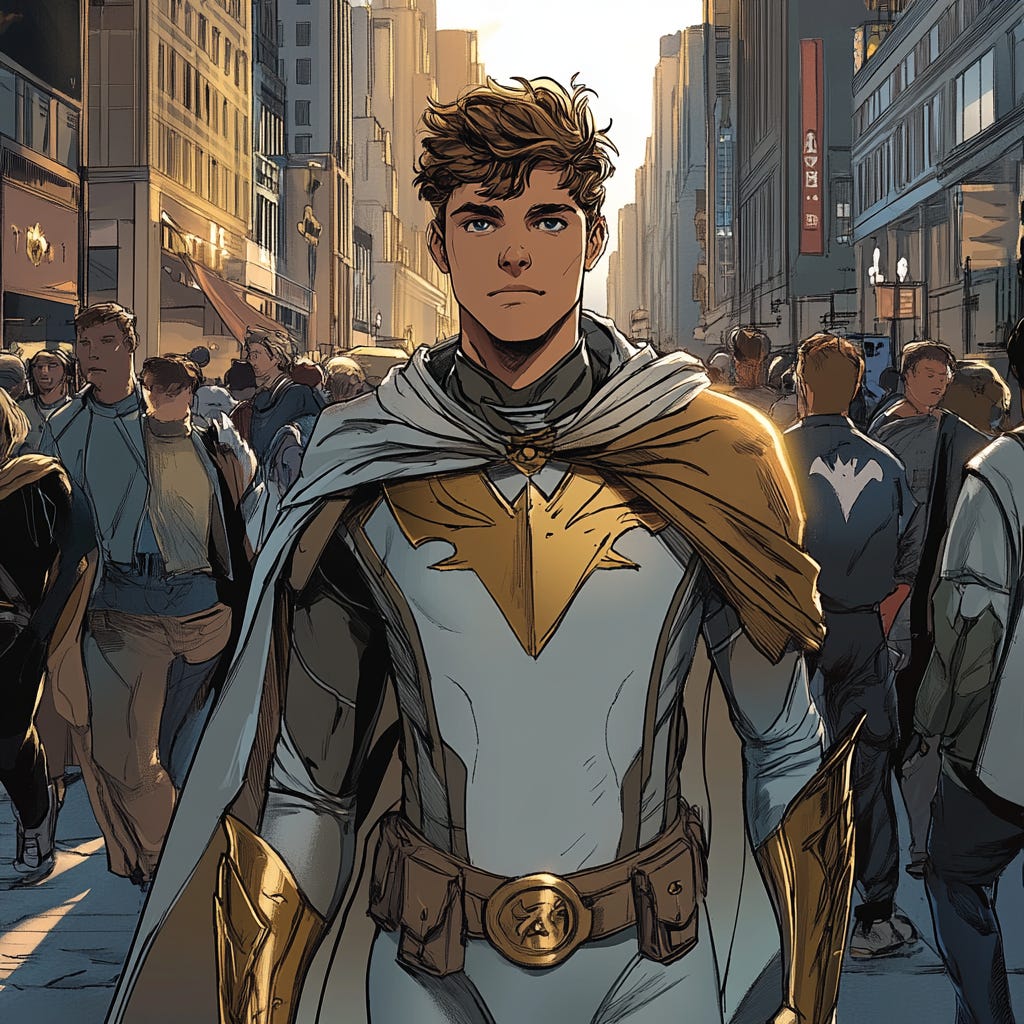
Don't be afraid to think of your life as a story.
Don't be afraid to make yourself the hero of your own story.
If today were a scene in the movie of your life, what would be at stake? What victory, however small, could you achieve?
Try this today: Before getting out of bed tomorrow morning, take 30 seconds to ask: "What's the title of today's scene?" Name it something intriguing like "The Day of Unexpected Connections" or "Finding the Hidden Opportunity." Then, throughout the day, notice how your mind naturally looks for elements that fit your chosen title.
Share your "story moment" from today on social media with #MyLifeStory or drop it in the comments below. What chapter are you living right now? I'd love to hear how you're applying this concept in your own life.