In 2019, I spent the entire year developing a television pitch called Beatrice Clover with John Ridley — the Academy Award-winning writer-director of 12 Years a Slave. We were at Disney, where John had an exclusive deal. My producer was a former Disney exec named Michael McDonald, who was the first believed in my pitch, and then brought John on board.
For a while, I thought the project was all set. We pitched a team of execs. They were into the project and wanted to develop it. Then the Disney executives we’d been working with were replaced. We waited months to pitch the new team. We did. They passed.
That was the end of 2019. I went from thinking I was about to break through to realizing I hadn’t made a dollar from writing that entire year.
It wasn’t a great Christmas.
And because Ridley’s deal was exclusive to Disney, he couldn’t take the pitch out with me.
I was back to square one.
Then, early 2020, I took the pitch out on my own. And it worked. Two offers — HBO and Netflix. I was all set to pitch Amazon when the meeting was canceled the morning of — highly unusual. The executive had woken up sick and wanted to be careful, considering what was going on.
That was Thursday, March 12.
By the following week, both offers were gone. The entire industry — the entire world — was shut down. I had a newborn at home. My third child, born December 2019. The pressure was real.
I spent the initial months of Covid like everyone else — in a state of radical uncertainty and fear. Hollywood might not be coming back. The door I’d been about to walk through didn’t just close, it appeared welded shut (with a face mask strung across it as a sign of the times)
For months, I thought my plan had failed.
It hadn’t.
I had failed.
Why?
Because, as I came to later realize, I wasn’t the right person to execute my own plan
And it wasn’t because of Covid or the Hollywood gatekeepers or any other external factor.
It was me.
I wasn’t who I needed to be to succeed at my goals.
Yet.
Fix the Character, Not the Plot.
When something isn’t working, the instinct is to change the plan. New strategy. New industry. New city.
But most of the time, the plan is fine. You’re the part that hasn’t caught up yet.
If you’ve ever watched a great movie or read a great book, you already understand this. The character wants something external — Rocky wants to go the distance, Luke Skywalker wants to defeat the Empire — but the story is really about who they have to become in order to get there. The external goal drives the internal change. That’s what makes a story worth watching.
It’s also what makes a life worth living.
My plan — to write stories for a living, to build a career as a writer — was never wrong. But the version of me sitting in those pitch rooms in 2019 wasn’t the writer who could pull it off on his own. I’d spent twenty years as a television executive and producer. I knew how to develop someone else’s show. I knew how to pitch a room. I did not yet know how to sit alone at a desk and write something that could stand on its own, find its audience, and hold up under real scrutiny.
I needed to change. Not the plan.
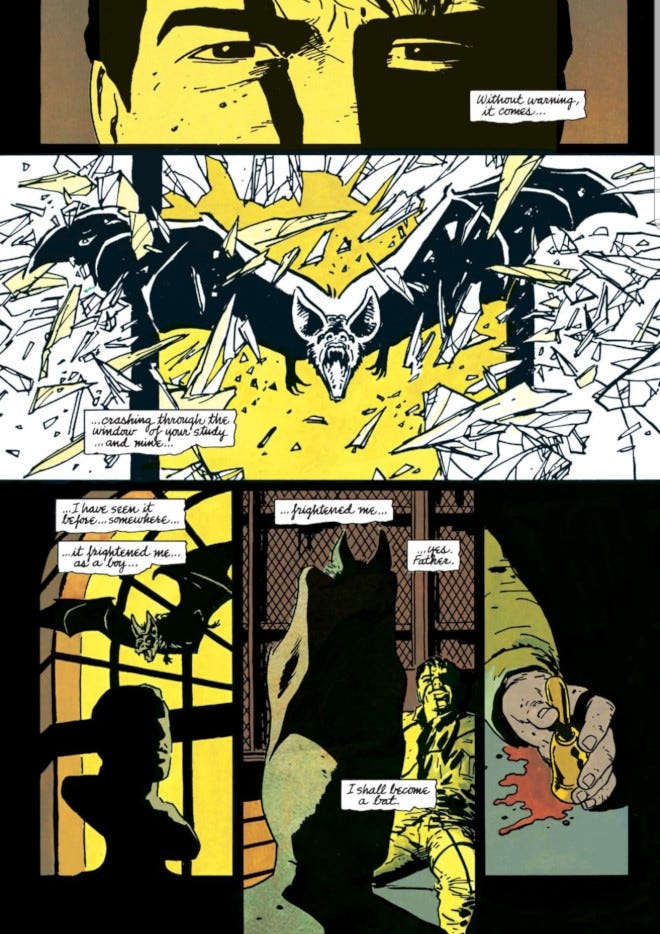
Becoming a Writer
By May 2020, with Hollywood still shut down, I stopped waiting for the old plot to resume.
I’d spent a few years getting to know the indie publishing world — first as a fan of authors who were self-publishing great work, then as a writer who saw a different path. Not just a way of getting my stories to audiences, but a way of getting better. Of improving my craft.
In television, feedback comes from executives who smile and say nice things, seemingly overflowing with praise for your work… right before they pass. Naturally, you look for feedback from the only people who read your work — Why? What didn’t work for them? How can I improve it? But, these gatekeepers are the wrong place to find it. As my lawyer once told me, “anything after they say ‘but’ is just another form of “no.” As in, ‘this is the single greatest mystery script we’ve ever read… buuuuuut…..’
In publishing, feedback comes from readers. They don’t smile. They don’t pass politely. They tell you the truth. They rate you on Amazon. They leave reviews. Or, as happened to me in a few cases, they reach out directly to tell you what they think (fortunately, these direct ones are usually positive reviews)
I needed that. Real feedback from actual readers.
So, given all that, and given what I saw was the potential of the ‘long tail’ of publishing my own books on Amazon, I took Beatrice Clover — the same pitch that Disney, HBO, and Netflix had all wanted as a television show — and I wrote it as a novel. It took me over a year. I published it in 2021.
That book changed everything. Not because it was a bestseller. Because writing it changed me. Writing novels was something I always told myself I’d do once I didn’t need the money. Then the pandemic happened, Hollywood shut down, and I had nothing but time. Turns out I was wrong about the money — and about myself. Writing novels forced me to develop skills I didn’t have: narrative structure across 300 pages instead of 60, character interiority you can’t fake in a script, the discipline of finishing something entirely alone.
Since then, I’ve written seven books. Two years of blog posts. This newsletter. And, I’m still writing, pitching, and developing television — with two shows now set up at studios and more in development (hopefully, with a production greenlight forthcoming for all of them).
The plan didn’t change. I did.

Kevin Hart’s Bowling Alley
Kevin Hart taught this to me. I first heard this in Kevin Hart’s autobiography I Can’t Make This Up. (worth the read)
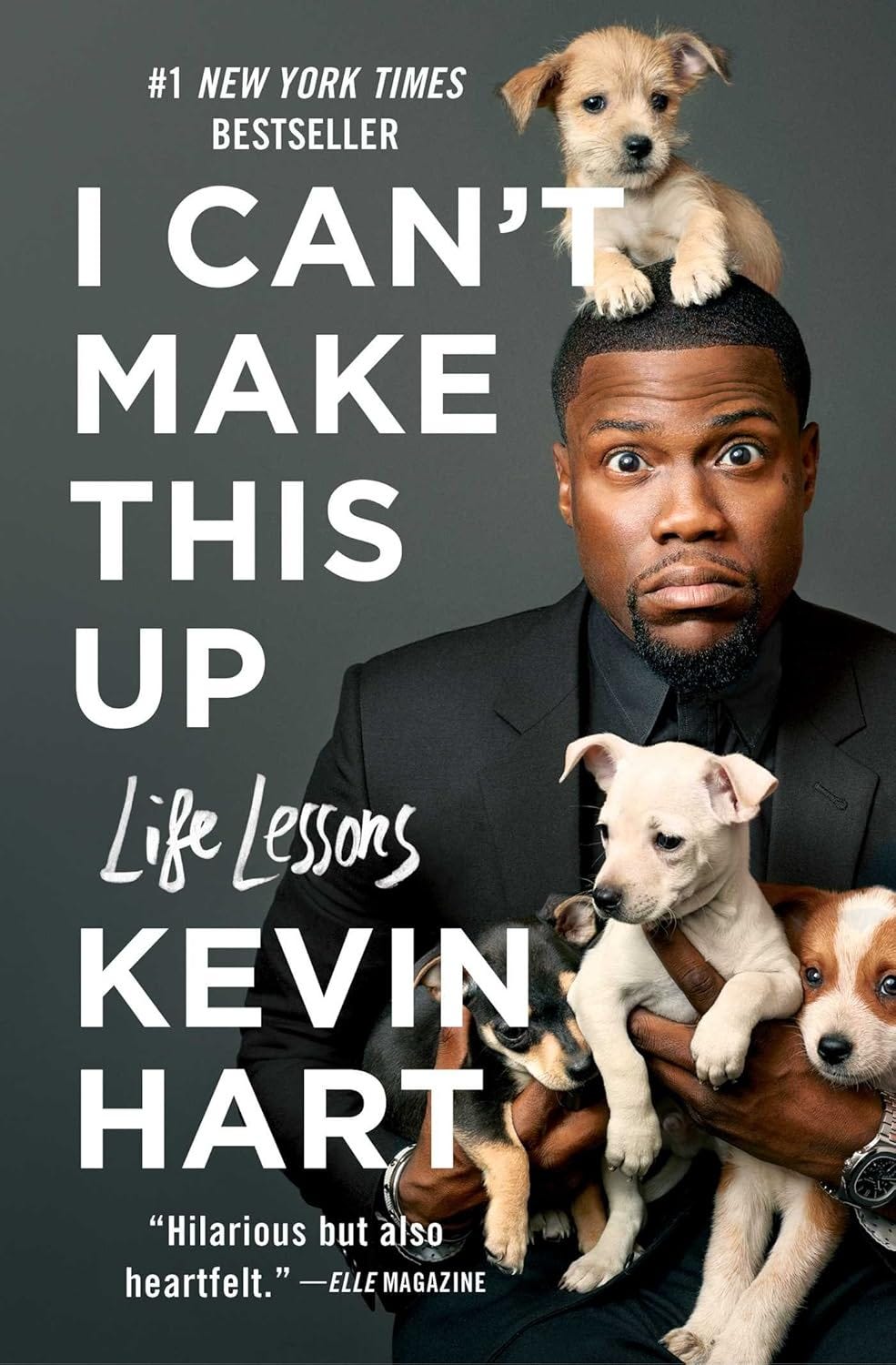
At 23, Hart had a network TV show about to launch. He flew his family and the entire cast to New York for the advertising upfronts at Radio City Music Hall. As he was about to walk on stage and have his show announced to the world, a guy backstage pulled him aside and told him the show wasn’t being picked up.
Done. In front of everyone he’d brought to celebrate.
Hart’s response wasn’t to chase another TV deal. It was to disappear into the stand-up circuit for seven years. Bowling alleys. Dive bars. College campuses. Strip clubs. Rooms where his punchlines got buried under crashing balls and pins. Ahem.
Kevin Hart wasn’t retreating. He was fixing the character.
He got better at crafting jokes. Learned how to connect with real people in small rooms who had no reason to care about him. Built a following one club at a time. Eventually Hollywood noticed again. He did a movie — Soul Plane — and it bombed. But it became the most pirated film of the year. Those bootlegged copies made their way to the younger Hollywood executives who told their bosses about it and before you could say “Netflix Special” executives suddenly knew Kevin Hart’s name—because they realized that he was genuinely funny.
Because by then, he was.
After seven years on the road, he got his next big break. The real one.
The difference between the 23-year-old who lost his show and the 30-year-old who became a star wasn’t the opportunity. The opportunity was always going to come back around. The difference was who he’d become in between.
Hart’s plan was always right. Be funny. Get famous. Entertain people. The plan never changed. But the kid standing backstage at Radio City wasn’t ready. The man who walked out of those bowling alleys was.
Here’s what Hart learned. Here’s what I learned. Here’s what I want you to understand.
The reason you don’t have the thing you want is not because your plan is wrong.
It’s because you are not yet the person who achieves that plan.
Not yet. That’s the key phrase. Because you’re becoming that person right now. Every day you show up and do the work — even when there’s no audience, no paycheck, no one watching — you are closing the gap between who you are and who you need to be.
The question isn’t whether the plan will work.
The question is whether you’ll become the person it needs you to be.
Three Things You Can Do Today
1. Fix the Character. Not the Plot.
Pretend you’re writing a movie of your life, and you’re creating yourself as the character. Write down the goal you’re chasing. Now underneath it, write the traits of a character who accomplishes that goal. The gap between who you are now and that character? That’s the story of your movie. That second list is the real work.
2. Find your bowling alley.
Where can you practice your craft this week without an audience, without applause, without permission? Hart didn’t wait for Hollywood to call him back. He went to rooms where nobody knew his name and got better. Go there.
3. Measure the character, not the plot.
At the end of this week, don’t ask “Did I hit my goal?” Ask: “Am I closer to being the person who hits it?” If yes — even by one percent — you’re on track.
The plot will catch up.
3. Find your Act 2. In every good story, the character can't win in Act 3 with the skills they had in Act 1. The gap gets closed in Act 2 — through failure, mentorship, hard experience. Look at whatever you're struggling with right now. What is it teaching you that you couldn't have learned any other way? That's not an obstacle to your story. That's your Act 2 doing its job.

Here’s what I know now that I didn’t know in 2019.
The plan was right. Write stories. Build an audience. Make a living doing work I believe in.
But the guy sitting in that Disney conference room wasn’t ready. He needed to go write seven books, face real readers, learn what he didn’t know, and come back as someone different.
That’s not failure. That’s the story working exactly the way stories work.
You’re not stuck. You’re not behind. Your plan probably isn’t broken.
You just haven’t finished becoming the person who pulls it off.Keep going. You’re closer than you think.If this hit home, share it with someone whose plan went sideways. They probably need to hear it.
Further Reading
Turning Pro by Steven Pressfield — on the moment you stop waiting for permission and start showing up. Check it out HERE.
Kevin Hart on Lewis Howes — Self-Doubt, Cancel Culture, and What Winning Really Means
“Be a Professional” — my earlier post on what survives when the job is gone. Read it HERE.
“Going Monk” — on strategic withdrawal as transformation. Read it HERE.
If you’re getting value from these posts, consider becoming a paying subscriber. Your support helps me bring you the best — straight to your inbox. Because every good story deserves a great ending.